

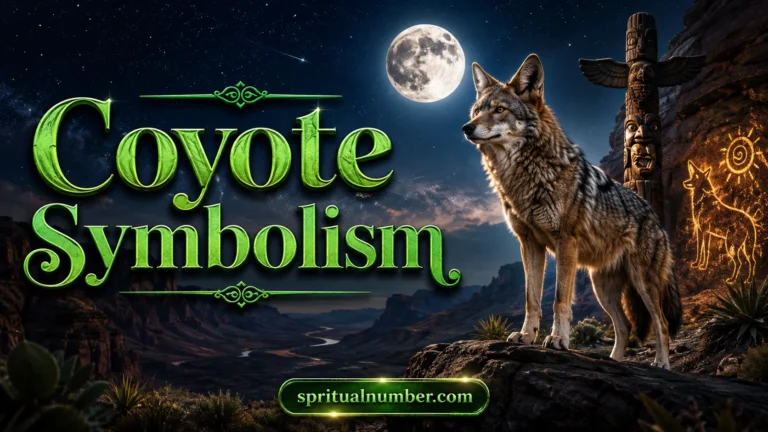
Coyote symbolism has fascinated cultures for generations through powerful stories and enduring meanings. Understanding coyote spiritual meaning reveals connections to adaptability, transformation, cleverness, and enduring resilience. Often portrayed as a trickster, this trickster archetype teaches valuable life lessons through both success and foolishness.
Many traditions associate the Coyote spirit animal with spiritual guidance, trusting instincts, and discovering the authentic self. Its paradoxical nature reflects balance, blending seriousness and playfulness, chaos and wisdom, and meaningful humor. These qualities encourage embracing change, navigating challenges, and gaining deeper self-awareness through experience.
Across Native American traditions and Native American culture, the coyote carries profound significance as one of many sacred animals. Stories from Diné culture and Navajo culture describe Mąʼii within emergence stories involving Áłtsé Hastiin, First Man, Áłtsé Asdzą́ą́, and First Woman. These narratives share moral messages, sacred teachings, and important consequences that inspire personal growth.
In both ancient tales and modern interpretations, the coyote meaning highlights resourcefulness, ingenuity, flexibility, and growth during uncertainty. Whether explored through dream symbolism, coyote dreams, a coyote sighting, or a spiritual journey, this totem animal offers hidden wisdom, inner guidance, and meaningful personal transformation. Through animal symbolism and rich cultural symbolism, the coyote remains a powerful teacher, messenger, and enduring transformation symbol.
Also read this: Skink Lizard Symbolism and Meaning Explained
Quick Answer
Coyote symbolism represents adaptability, transformation, resilience, and cleverness, encouraging people to trust their instincts, embrace change, and grow through experience. Rooted in Native American traditions and enriched by modern interpretations, the Coyote spirit animal serves as a trickster, teacher, and spiritual guide, offering wisdom, self-awareness, and meaningful personal transformation.
What Is a Coyote?
The coyote (Canis latrans) is a wild canine native to North America. It resembles a small wolf but has a narrower muzzle, larger ears, and a leaner body. Its coat is usually gray-brown with lighter underparts, though colors vary by region.
Because coyotes thrive in deserts, mountains, prairies, suburbs, and cities, they’ve become symbols of flexibility. Unlike animals tied to a single habitat, the coyote seems able to reinvent itself wherever it goes.
Why Its Appearance Matters
- Sharp ears suggest alertness and awareness.
- Lean body suggests endurance rather than brute strength.
- Desert and wilderness settings suggest freedom and survival.
- Nighttime appearances often create a mysterious or spiritual feeling.
Historical Background and Ancient Roots
The coyote has been part of North American storytelling for thousands of years. Long before European colonization, many Indigenous peoples included coyote figures in myths, teachings, and ceremonial stories.
The Trickster Archetype
In numerous Native traditions, Coyote appears as a trickster. However, “trickster” doesn’t simply mean evil or deceptive. Trickster figures often break rules, expose human weaknesses, and create change through unexpected actions.
Common themes include:
- Outsmarting stronger opponents.
- Ignoring social rules.
- Teaching lessons through mistakes.
- Creating disorder that leads to new understanding.
- Moving between the human, animal, and spiritual worlds.
Importantly, Indigenous stories are diverse. The coyote’s role differs among tribes and regions. Some traditions emphasize humor and chaos, while others emphasize wisdom, creation, or sacred transformation.
From Ancient Stories to Modern Symbolism
As European settlers moved westward, the coyote entered broader American folklore. Ranching communities sometimes viewed it as a nuisance, while writers and artists saw it as a symbol of the untamed West. Over time, these perspectives mixed together, creating the complex modern image of the coyote.
Coyote Symbolism in the United States
For many Americans, the coyote represents the spirit of the frontier. It survives where conditions are harsh, adapts to human expansion, and refuses to disappear.
Common Meanings
- Adaptability in changing circumstances.
- Independence and self-reliance.
- Intelligence and resourcefulness.
- Survival during hardship.
- Nonconformity and resistance to control.
- Cleverness that can become trickery.
In contemporary America, these meanings often appear in outdoor culture, western art, personal symbolism, and wildlife appreciation. People who identify with the coyote may see themselves as resilient outsiders or creative problem-solvers.
Quick reference: coyote meanings in different contexts
| Context | Meaning in the USA | Common Associations | Notes |
| Wildlife encounters | Adaptability and survival | Awareness, caution, resilience | Often tied to local environment |
| Native storytelling | Trickster, teacher, transformer | Humor, wisdom, disruption | Varies across tribes and traditions |
| Western culture | Frontier spirit | Independence, toughness, wilderness | Shaped by literature and film |
| Modern personal symbolism | Self-reliance and individuality | Creativity, unconventional path | Common in tattoos and art |
| Negative or cautionary use | Trickery or opportunism | Deception, unpredictability | Context determines whether this is criticism or admiration |
Spiritual Meaning of Coyote
Many people interpret coyote encounters spiritually, though meanings vary widely. In modern spiritual discussions, the coyote is often associated with transformation, awareness, and learning through experience.
Common Spiritual Themes
- Pay attention to overlooked opportunities.
- Question assumptions and routines.
- Use humor during difficult times.
- Adapt rather than resist every change.
- Learn from mistakes instead of hiding them.
These interpretations are modern and eclectic. They shouldn’t be confused with the specific teachings of any particular Native nation or spiritual tradition.
Cross-Cultural Perspectives
While the coyote is primarily a North American symbol, similar trickster figures appear worldwide. Many cultures have animals that represent cleverness, disruption, or transformation.
Comparative Themes
- Coyote in North America often parallels the fox in Europe.
- Trickster animals appear in African, Asian, and Indigenous traditions.
- These figures challenge authority and expose hidden truths.
- They are often both admired and distrusted.
The important difference is that coyote symbolism is deeply rooted in North American landscapes and Indigenous storytelling. It isn’t simply a generic symbol of cleverness.
What Does Seeing a Coyote Symbolize?
Many people wonder whether a coyote sighting has symbolic meaning. There is no universal interpretation, but several themes commonly appear in folklore and modern spirituality.
Possible Symbolic Interpretations
- A reminder to stay adaptable.
- A call to be more observant.
- A warning against naivety.
- Encouragement to trust your resourcefulness.
- An invitation to examine where you feel constrained.
Context matters. A coyote crossing your path, hearing coyotes howl at night, or repeatedly encountering coyote imagery may feel different to different people.
What Does a Coyote Mean in a Dream?
Dream interpretation is subjective, but coyotes often symbolize instincts, adaptability, and hidden intelligence. Because coyotes can be both helpful and deceptive in stories, dream meanings can vary.
Common Dream Themes
- Using cleverness to solve a problem.
- Feeling uncertain about someone’s motives.
- Navigating a period of change.
- Reconnecting with intuition.
- Learning from a mistake or setback.
A threatening coyote dream may reflect anxiety or distrust. A calm or friendly coyote may suggest resilience and guidance through change.
Emotional and Psychological Associations
Psychologically, the coyote often represents the part of ourselves that survives by adapting. It isn’t usually associated with brute force. Instead, it symbolizes flexibility, improvisation, and quick thinking.
Feelings Commonly Linked to the Symbol
- Resourcefulness under pressure.
- Curiosity and experimentation.
- Independence from social expectations.
- Playfulness mixed with caution.
- Comfort with uncertainty.
For some people, the coyote also represents the outsider identity. It survives at the edges of society and often thrives where others struggle.
Coyote Tattoos and Personal Symbolism
Coyote tattoos have become increasingly popular among people drawn to themes of resilience and freedom. Designs range from realistic wildlife portraits to stylized tribal, geometric, or minimalist art.
Common Tattoo Meanings
- Surviving difficult life experiences.
- Embracing an unconventional path.
- Valuing independence and self-reliance.
- Honoring connection to the American West.
- Identifying with adaptability and cleverness.
However, when using Indigenous-inspired imagery, many people choose to learn about the specific cultural sources and avoid copying sacred or ceremonial designs without understanding their significance.
Coyote in Popular Culture
American media has strongly shaped modern coyote symbolism. Cartoon characters, western films, road-trip stories, and desert imagery have all influenced public perception.
Major Cultural Influences
- The clever but often unsuccessful trickster character.
- The lonely traveler of the desert landscape.
- The survivor that persists despite obstacles.
- The wild animal that adapts to human environments.
These portrayals can exaggerate certain traits, especially cunning and mischief, while overlooking the deeper spiritual and cultural meanings found in Indigenous traditions.
Misunderstandings and Controversies
Because coyote symbolism comes from many sources, misunderstandings are common. Some people reduce the symbol to “trickster” and miss its roles as teacher, creator, or survivor.
Common Misunderstandings
- Assuming all Native traditions interpret Coyote the same way.
- Equating trickster with evil.
- Treating spiritual interpretations as universal facts.
- Using Indigenous imagery without understanding its context.
There are also practical tensions around real coyotes. In some communities, coyotes are admired as wildlife; in others, they’re viewed as threats to livestock or pets. These real-world debates can influence symbolic interpretations.
How the Meaning Has Changed Over Time
The coyote’s symbolism has never been fixed. Ancient stories emphasized transformation, boundary-crossing, and teaching through disruption. Frontier-era Americans often emphasized survival and wildness.
Today, urban and suburban Americans increasingly encounter coyotes near homes and parks. As a result, the symbol has expanded again. It can now represent coexistence with wildlife, adaptation to human-dominated landscapes, and the ability to thrive during rapid change.
In other words, the coyote remains a living symbol because the animal itself keeps adapting. Its meaning evolves as American society changes.
FAQs
What is the meaning of coyote symbolism?
Coyote symbolism represents adaptability, resilience, cleverness, and transformation in many cultures. Its symbolic meaning often encourages embracing change, trusting instincts, and finding the authentic self while overcoming life’s uncertainties.
What is the coyote spiritual meaning in personal growth?
The coyote spiritual meaning is closely linked to personal growth, self-awareness, and learning through experience. As a teacher and messenger, the coyote inspires self-discovery, inner guidance, and meaningful personal transformation during life’s challenges.
Why is the coyote considered a trickster archetype?
The coyote is known as a trickster and a powerful trickster archetype because it teaches through humor, trickery, and occasional missteps. Its stories reveal life lessons, hidden wisdom, and important moral lessons about choices and consequences.
What role does coyote play in Native American traditions?
In Native American traditions and Native American culture, the coyote is among the respected sacred animals featured in folklore and emergence stories. Within Diné culture and Navajo culture, Mąʼii carries cultural symbolism, spiritual teachings, and memorable messages.
What does a coyote sighting or coyote dream symbolize?
A coyote sighting or coyote dreams often carry spiritual messages related to awareness, intuitive guidance, and spiritual wisdom. These experiences may encourage navigating challenges, recognizing opportunities, and maintaining balance in life with a positive mindset.
Conclusion
Understanding coyote symbolism reveals a deeper coyote spiritual meaning centered on adaptability, transformation, resilience, and wisdom. Whether viewed as a trickster, teacher, messenger, or Coyote spirit animal, it offers valuable life lessons about trusting instincts, embracing change, and navigating challenges. Rooted in Native American traditions and enriched by modern interpretations, the coyote reflects balance, resourcefulness, and enduring spiritual guidance.
Its symbolic meaning encourages self-awareness, personal growth, and meaningful self-discovery through experience. By embracing its hidden wisdom, you can gain greater clarity, inner guidance, and confidence throughout your spiritual journey.

