
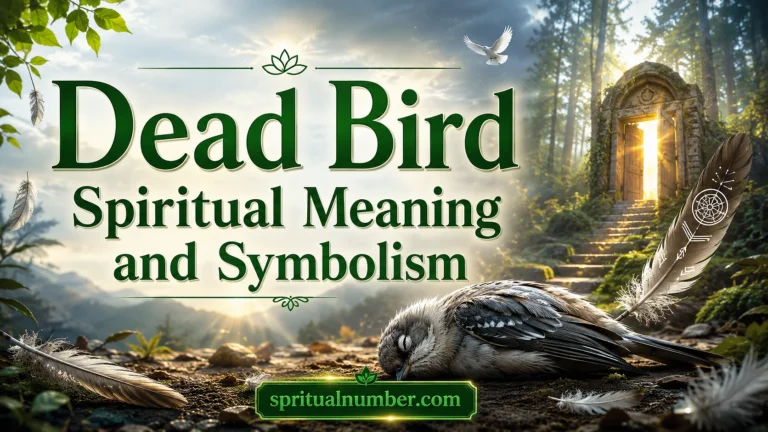
Seeing a dead bird can stir unease, curiosity, or deep introspection, especially during uncertain moments. The dead bird spiritual meaning and symbolism often points toward transformation, release, renewal, or a meaningful life cycle ending.
Across cultural traditions, birds have represented freedom, spiritual messengers, and a bridge between heavens and Earth. Yet a lifeless bird does not automatically represent an omen of death or bad news.
Its meaning can change through personal context, bird location, emotions, and current life circumstances. A dead bird in home, dead bird in yard, or dead bird in dreams may encourage personal growth, self-discovery, and release the past.
These encounters can symbolize new opportunities, change and renewal, or a close of one chapter. Looking beyond old superstition can reveal a quieter message about transition and release.
Also Read This: Orange Ladybug Spiritual Meaning and Symbolism
Quick Answer
In dead bird spiritual meaning and symbolism, most Americans today read it as a sign of endings, transformation, or emotional release. It is less often seen as a strict bad omen. Across cultures, it can also point to spiritual messages, life cycles, and the fragile nature of life.
TL;DR
- A dead bird often signals an ending or a closing chapter.
- It can also point to transformation and new beginnings.
- Many Americans see it as emotional, not purely superstitious.
- Older folklore treated it more often as a warning sign.
- The meaning shifts based on the bird type and setting.
- Modern use includes dream talk, art, and personal reflection.
What a Dead Bird Symbol Really Represents
Before looking at history, it helps to understand why this image feels so strong. Birds already carry heavy symbolism on their own, which shapes how people read their death.
Because birds fly high and move freely, they are often linked to the soul, hope, and spiritual messages. When that image is paired with death, the symbolism becomes layered and personal.
- A single dead bird often points to a personal ending or shift.
- The specific location, like a doorstep or yard, can add meaning.
- The type of bird, such as a robin or crow, shapes the message.
- A peaceful appearance can feel different than a violent one.
- Context and timing often matter more than the event itself.
Historical Background and Ancient Roots
Dead bird symbolism did not start with modern spirituality or social media. It stretches back thousands of years, long before many current religions existed. Understanding these roots helps explain why the image still feels so powerful today.
Ancient and Pre-Christian Views
In many early societies, birds were seen as messengers between the earthly world and the spiritual realm. Because of this, their death was rarely viewed as ordinary.
Some ancient cultures treated a dead bird as a serious omen. Others saw it as a natural part of the life and death cycle that all living things share.
Mythology and Folklore
- Ancient Egyptian belief linked birds to the soul’s journey after death.
- Celtic tradition connected birds to messages from the spirit world.
- Old European folklore often treated a dead bird as a warning sign.
- Native American traditions frequently linked birds to balance and change.
Dead Bird Symbolism in the USA
In the United States, the meaning of a dead bird has shifted a lot over time. Early American folklore often leaned on old European superstitions brought over by settlers.
In the past, finding a dead bird was sometimes treated as a spiritual warning or a message from beyond. However, this fear-based view has softened a great deal in recent years.
Today, many Americans blend old tradition with modern, personal reflection. A dead bird is less often feared and more often used as a symbol for closure or growth.
- It’s often seen as a sign to pause and reflect.
- Many treat it as a symbol of closure or an ending.
- Some read it as a reminder to release old habits.
It’s frequently tied to personal growth rather than danger.
Dead Bird Symbolism at a Glance: A Quick Reference Table
This table breaks down a few common dead bird situations and what they tend to mean in the USA today.
| Context | Meaning in the USA | Common Associations | Notes |
| Dead bird on doorstep | A message close to home about change | Reflection, transition | Often tied to a personal life shift |
| Dead bird in the yard | A sign of an ending or life cycle | Nature, closure | Common near gardens and porches |
| Dead robin | Closing one chapter to start another | Renewal, hope | Robins are tied to new beginnings |
| Dead crow | A deeper or more serious message | Mystery, transformation | Crows carry mixed folklore meanings |
| Dead bird in a dream | Emotional release or unresolved grief | Letting go, self-reflection | Often linked to inner change |
Cross-Cultural and Spiritual Meanings
Beyond the United States, many traditions around the world hold their own beliefs about a dead bird. These views are worth a brief look, since they often shape how Americans interpret the symbol today.
- Christian tradition sometimes links a fallen bird to mortality and faith.
- Native American teachings often view it as part of nature’s balance.
- Folk traditions in parts of Europe still treat it as a warning.
- Eastern spiritual views often frame it as a lesson in impermanence.
Across these traditions, one theme repeats often. A dead bird rarely means only one thing. Instead, it usually points to change, whether that change feels welcome or difficult.
Emotional and Psychological Meaning
Beyond folklore, a dead bird often stirs up real emotion. This reaction is worth exploring, since it says a lot about how people process loss and change.
Because birds represent lightness and freedom, seeing one lifeless can feel like a small emotional jolt. Many people use that feeling as a starting point for reflection.
- A quiet moment of sadness or unexpected discomfort.
- A nudge to reflect on something ending in your life.
- A reminder that growth sometimes follows loss.
- A sense of mystery about timing or coincidence.
- A call to release stress, grief, or old attachments.
Dead Bird Symbolism in Dreams
Dreaming about a dead bird is fairly common, and people often want to understand what it means. While dream meanings are personal, a few themes come up again and again.
- A calm dead bird in a dream may reflect acceptance of an ending.
- A distressing image might point to unresolved grief or worry.
- A dead bird found indoors in a dream can suggest inner change.
Multiple dead birds may symbolize a bigger life transition.
These ideas are not fixed rules. Instead, they offer a starting point, and many people find it helpful to think about what was happening in their life at the time.
Modern Usage: Art, Dreams, and Social Media
Today, dead bird symbolism shows up in more places than just folklore. This section looks at how the image appears in everyday modern life.
Art and Personal Expression
Artists and writers often use a dead bird to represent loss, change, or a turning point. It shows up in poetry, music, and visual art as a quiet, emotional symbol.
- Used in art to represent loss without feeling overly dramatic.
- Common in poetry as a symbol of endings or transitions.
- Sometimes used in tattoos to mark a difficult but important chapter.
Social Media and Personal Reflection
Online, people often share dead bird encounters and ask what they might mean. This shows how much the symbol still resonates with a modern audience.
- Spiritual and wellness accounts often frame it as a growth signal.
- Personal posts often connect it to a recent life change.
- Interest tends to rise around themes of loss, healing, and renewal.
Misunderstandings, Misuse, and Controversies
Like many symbols tied to death, this one can be easily misunderstood. It helps to separate thoughtful, reflective interpretations from fear-based or harmful ones.
Most modern views treat a dead bird as a gentle nudge toward reflection, not a literal warning. However, older superstition can still create unnecessary fear for some people.
It is also worth noting that finding a dead bird is often simply a natural event. Not every encounter needs to carry a deep symbolic meaning, and that is a completely reasonable view too.
- Older superstition sometimes causes unnecessary fear or anxiety.
- Not every encounter needs a symbolic explanation.
- Context and personal belief should guide interpretation.
- Respectful reflection differs from spreading fear-based claims.
How This Symbolism Has Shifted Over Time
Beliefs about a dead bird have changed a great deal across history. Looking at this shift helps explain why older and newer interpretations can feel so different.
In the past, a dead bird was often treated as a serious omen tied to danger or bad luck. Over time, this view has softened into something more personal and reflective.
- Fear-based readings are far less common than in past centuries.
- Modern interpretation leans more on emotional and personal meaning.
- Wellness and spiritual culture have reshaped the symbol’s tone.
- Today’s meaning often blends old folklore with self-reflection.
FAQs
What is the dead bird spiritual meaning and symbolism?
The dead bird spiritual meaning and symbolism often represents transformation, renewal, release, and the completion of a life cycle. It may encourage personal growth and spiritual growth.
Is a dead bird an omen of death or a warning?
A dead bird is not necessarily an omen of death or bad news. Its symbolic meaning can reflect change, transition, or the ending of an important phase.
What does a dead bird in home spiritually mean?
A dead bird in home may symbolize release the past, old habits, or space for something new. Your personal context and emotional response can shape its interpretation.
What does a dead bird in yard symbolize?
A dead bird in yard can represent change and renewal, a chapter closing, or transition and release. Some cultural traditions also connect birds with spiritual messages.
What does a dead bird in dreams mean spiritually?
A dead bird in dreams may reflect personal transformation, introspection, or an ending within your life circumstances. It can also suggest new opportunities after a period of change.
Conclusion
The dead bird spiritual meaning and symbolism often reflects transformation, release, and change and renewal rather than a literal bad omen. Its symbolic meaning may point toward personal growth, spiritual growth, or the closing of an important life cycle. Through personal reflection and personal context, this encounter can become a meaningful reminder that every ending and transformation can create space for new beginnings.

