

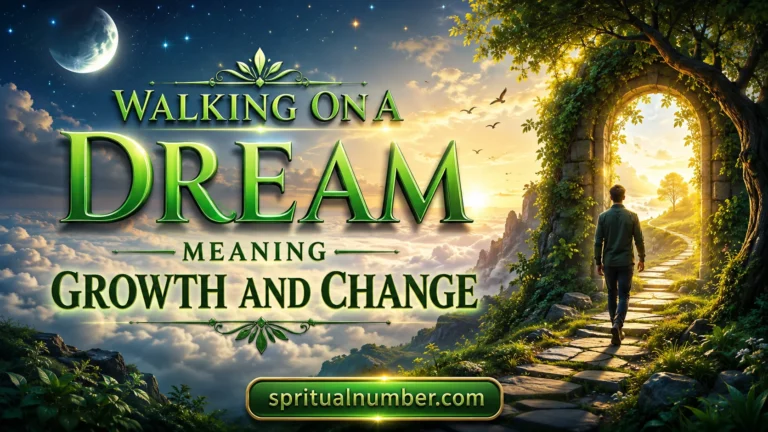
Walking On A Dream Meaning often reflects deep dream interpretation tied to growth and change in life experience. It symbolizes how dreams express the subconscious mind and hidden psychological reflection. Many people experience walking dreams that reveal emotional growth, self-discovery, and shifting life journey patterns.
These visions often show transition, personal growth, and subtle spiritual message signals. They connect strongly with dream symbolism and inner awareness of emotions. In many cases, such dreams indicate evolving life path and developing inner healing.
From a dream analysis perspective, walking represents progression, direction, and clearer decision making in real life. It reflects subconscious thoughts, conscious mind, and the ongoing balance between uncertainty and clarity. Elements like road symbolism, walking on road, and dream surroundings significance highlight your current life direction.
Such dreams often signal personal transformation, emotional breakthrough, and steady forward motion toward new beginnings. They encourage self-discovery journey, spiritual guidance, and stronger psychological growth toward life changes and inner confidence.
Also read this: Money in Dream Meaning and Messages from Your Subconscious
What Does “Walking On A Dream” Symbolize?
This section explains the core symbolic image itself. Understanding the visual and emotional elements helps clarify why Americans connect so deeply with the phrase.
The Symbolic Image
The phrase creates a mental picture rather than a literal object. People imagine movement through an unreal or elevated space.
Key symbolic elements include:
• Walking represents action, progress, and personal agency
• Dreams symbolize imagination, possibility, and subconscious insight
• Elevated settings suggest emotional or spiritual uplift
• Soft or glowing imagery implies safety and hope
• Forward motion signals change rather than escape
Together, these elements create a meaning centered on transformation that feels both earned and magical.
Core Meaning at a Glance
In modern American usage, three meanings appear most often:
• Personal growth after hardship
• Living a long-desired reality
• Emotional or psychological renewal
Historical Roots of Dream Symbolism
While the phrase feels contemporary, dream symbolism is ancient. Human cultures have long treated dreams as bridges between inner and outer worlds.
Ancient Interpretations
Early civilizations believed dreams carried guidance or revelation.
• Ancient Egyptians saw dreams as messages from divine forces
• Greek thinkers linked dreams to prophecy and self-knowledge
• Indigenous traditions viewed dreams as spiritual journeys
• Medieval Europe connected dreams with moral or symbolic lessons
Because dreams represented transformation, combining them with movement naturally suggested personal evolution.
From Myth to Modern Language
By the 19th and 20th centuries, psychology reshaped dream meaning.
• Dreams became symbols of subconscious desires
• Personal identity replaced religious prophecy as focus
• Self-improvement movements adopted dream imagery
• Popular culture framed dreams as achievable goals
This shift strongly influenced how Americans interpret the phrase today.
Walking On A Dream Meaning in American Culture
In the United States, symbolism often centers on individual progress. The phrase fits perfectly into the national narrative of reinvention.
The American Dream Connection
The expression echoes broader cultural ideas about possibility.
• Success through perseverance and personal effort
• Reinventing oneself after setbacks
• Pursuing happiness as a life goal
• Turning imagination into reality
Americans often describe major life milestones—graduation, recovery, career success—as feeling like “walking on a dream.”
Everyday Cultural Usage
You’ll hear the phrase in many everyday contexts:
• Social media captions celebrating achievements
• Wedding speeches describing emotional fulfillment
• Recovery journeys after difficult life phases
• Artistic storytelling about transformation
Because American culture values forward momentum, walking becomes a metaphor for actively shaping one’s destiny.
Emotional and Psychological Meaning
Symbolism also operates internally. Psychologically, the phrase reflects how people process change.
Emotional Signals
Feeling like you’re walking on a dream often suggests:
• Relief after prolonged stress
• Confidence replacing uncertainty
• Emotional validation or acceptance
• A sense of alignment with life direction
The dream imagery softens reality, making growth feel gentle instead of overwhelming.
Identity and Personal Growth
Psychologists often link dream metaphors to identity transitions:
• Leaving an old self behind
• Entering adulthood or new roles
• Healing from emotional wounds
• Discovering personal purpose
In this sense, the phrase marks a psychological threshold.
Spiritual Meaning Across Cultures
Although American interpretations dominate today, similar ideas appear worldwide.
Shared Spiritual Themes
Across traditions, dream-walking symbolism often reflects:
• Spiritual awakening or awareness
• Guidance from intuition or higher wisdom
• Transition between life stages
• Trust in unseen possibilities
However, interpretations vary widely and remain culturally specific.
Respectful Cultural Differences
Some cultures emphasize collective meaning rather than individual success. Others see dreams as sacred communication rather than personal ambition. Modern American use tends to focus more on self-growth than spiritual authority.
Symbolism in Music, Media, and Pop Culture
Modern media played a major role in spreading the phrase’s emotional meaning.
Why the Phrase Resonates Today
Music, film, and storytelling amplify symbolic language because they express emotion quickly.
Common themes include:
• Falling in love unexpectedly
• Achieving long-term goals
• Escaping difficult past experiences
• Experiencing creative inspiration
Pop culture reinforces the idea that transformation feels surreal yet real.
Social Media Influence
Online platforms expanded the phrase’s usage:
• Captions celebrating life milestones
• Travel posts expressing freedom
• Mental health recovery narratives
• Personal branding focused on growth
The symbolism became shorthand for emotional success.
Modern Uses: Tattoos, Decor, and Personal Expression
Symbolism often becomes visible through art and lifestyle choices.
Tattoo Symbolism
People choose dream-walking imagery to represent:
• Overcoming adversity
• Beginning a new chapter
• Personal independence
• Hope after loss
Designs frequently include clouds, stars, pathways, or glowing landscapes.
Home and Lifestyle Symbolism
In decor and fashion, the theme appears through:
• Dreamlike wall art emphasizing calm environments
• Inspirational typography prints
• Soft pastel or celestial aesthetics
• Vision boards focused on future goals
These visuals reinforce emotional growth narratives.
Contexts and Meanings in the USA
Below is how symbolism shifts depending on context.
| Context | Meaning in the USA | Common Associations | Notes |
| Personal achievement | Success feels unreal yet earned | Graduation, promotions | Often tied to perseverance |
| Romantic relationships | Emotional fulfillment | Weddings, partnerships | Suggests harmony and joy |
| Mental health recovery | Healing and stability | Therapy journeys | Symbol of renewal |
| Creative success | Inspiration realized | Artists, entrepreneurs | Linked to passion |
| Life transitions | Entering new identity | Moving, parenthood | Marks transformation |
Misunderstandings and Controversies
Like many symbolic phrases, meaning can shift or become diluted.
Common Misinterpretations
Some misunderstandings include:
• Assuming it means escaping reality entirely
• Viewing it as unrealistic optimism
• Using it only for material success
• Ignoring emotional or psychological depth
Traditionally, the phrase refers to transformation within reality, not avoidance of it.
Commercialization Concerns
As phrases spread through marketing, symbolism sometimes loses nuance. Critics argue inspirational language can oversimplify complex life struggles. Still, many people reclaim the phrase for genuine personal storytelling.
How the Meaning Has Changed Over Time
Symbolism evolves with culture.
Earlier Interpretations
Historically, dream imagery implied divine messages or prophecy.
Modern Interpretation (2025–2026)
Today, Americans interpret it differently:
• Focus on personal growth instead of fate
• Emotional authenticity over religious authority
• Self-development replacing external destiny
• Mental wellness shaping symbolic language
The shift reflects broader cultural emphasis on psychological awareness.
Why People Relate to This Symbol Today
The phrase resonates because modern life includes frequent transitions.
Cultural Conditions Behind Its Popularity
• Rapid career and identity changes
• Increased focus on self-improvement
• Public sharing of personal milestones online
• Greater openness about emotional growth
Symbolically, walking on a dream expresses hope during uncertainty.
FAQs
What is Walking On A Dream Meaning in dream interpretation?
Walking On A Dream Meaning reflects deep dream interpretation connected to growth and change in your life journey. It shows how the subconscious mind communicates through dream symbolism, revealing emotional growth, self-discovery, and evolving personal growth.
What does walking in dreams symbolize about life path and direction?
Walking dreams often represent progression, direction, and clarity in your life path. Through dream analysis, they highlight decision making, uncertainty, and movement toward new beginnings and personal transformation.
Why do walking dreams reflect emotional and psychological growth?
These dreams reveal psychological reflection from the subconscious, showing emotional growth and inner awareness. They often signal emotional breakthrough, inner healing, and deeper understanding of your emotions and psychological growth.
Can walking dreams indicate spiritual guidance or life transition?
Yes, walking dreams often carry a spiritual message or divine guidance during life changes and transition. They reflect spiritual self, faith, and evolving inner transformation toward a more balanced life journey.
What is the meaning of difficult walking dreams or hesitation in dreams?
Difficult walking dreams and hesitation in dreams symbolize obstacles, insecurity, and slow progress in your life path symbolism. They often reflect struggles, emotional imbalance, and the need for stronger confidence and steady progress.
Conclusion
In conclusion, Walking On A Dream Meaning reflects deep dream interpretation connected with growth and change across your life journey. It highlights the role of the subconscious mind in shaping dream symbolism, emotional awareness, and inner clarity.
Such dreams often represent personal transformation, emotional growth, and steady progression toward meaningful life path direction. Through dream analysis, they reveal spiritual guidance, psychological reflection, and evolving self-discovery. Ultimately, they encourage forward motion, stronger confidence, and lasting personal growth through every stage of life changes.

