
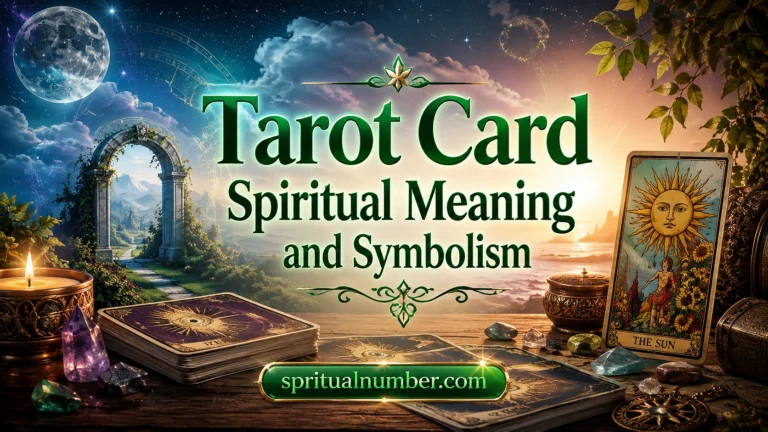
Understanding tarot card spiritual meaning begins with exploring rich tarot symbolism and timeless tarot card symbolism. This guide explains meaningful tarot card meanings through symbolism explained, trusted tarot interpretation, and practical spiritual guidance.
You will discover how The Tower tarot card and its Tower card meaning reflect sudden change, unexpected change, transformation, and lasting personal growth. These powerful symbolic images reveal hidden truths, inspire self-reflection, strengthen intuition, and encourage a meaningful spiritual journey.
Whether exploring a tarot deck or learning beginner tarot, every card carries symbolic meanings rooted in Major Arcana, Minor Arcana, and traditional symbolism. Their visual symbols, colors in tarot, numbers in tarot, archetypes, and universal symbols offer personal insight, inner guidance, and intuitive wisdom for decision making.
From life transitions and emotional healing to self-awareness, awakening, renewal, and personal transformation, modern tarot remains a respected spiritual tool across American culture and the United States.
Also Read This: Groundhog Spiritual Meaning and Symbolism Explained
Quick Answer
In tarot card spiritual meaning and symbolism, each card represents a lesson, emotion, or stage of personal growth rather than a fixed prediction. In the United States, tarot is most often used for reflection, self-awareness, and guidance during uncertain times. Broader traditions connect the deck to archetypes, numerology, and the human journey toward understanding.
TL;DR
- Tarot cards symbolize life lessons, emotions, and personal growth.
- The deck began in Europe as illustrated playing cards.
- Major Arcana cards reflect major spiritual turning points.
- Minor Arcana cards address everyday situations and feelings.
- In the USA, tarot is popular for reflection, not prediction.
- Modern use includes journaling, decor, tattoos, and social media.
What Tarot Cards Actually Represent
Before exploring history, it helps to understand how tarot cards are built and why they hold meaning. A traditional tarot deck contains seventy-eight cards, each filled with symbolic imagery. These images work together like a visual language, guiding both intuition and reflection.
The deck splits into two main parts, which shape how each card is interpreted. Understanding this structure makes the rest of tarot symbolism much easier to follow.
How the Symbol Usually Appears
- Detailed illustrations featuring people, animals, and nature.
- Repeating symbols like cups, swords, wands, and coins.
- Numbers that carry their own symbolic weight.
- Bright or muted colors that shift a card’s emotional tone.
Historical Roots and Ancient Beliefs About Tarot
Tarot symbolism did not begin as a spiritual tool. Its origins are more practical, though the meaning grew richer over time.
Early Origins in Europe
Tarot cards first appeared in Europe during the fifteenth century as illustrated playing cards. At that time, they were used mainly for games rather than spiritual guidance. However, the artwork often reflected religion, philosophy, and social structure of the era.
From Playing Cards to Spiritual Tool
Over the following centuries, mystical groups began connecting tarot imagery with astrology, numerology, and esoteric teachings. Because of this shift, tarot slowly transformed into a tool for reflection and inner exploration. This evolution shows how symbolism can change meaning while keeping its original structure intact.
Tarot Symbolism in the USA
While tarot has deep European roots, it holds a distinct place in American culture today. Because tarot blends creativity, psychology, and spirituality, it fits naturally into modern self-care practices.
Everyday American Associations
In the United States, tarot is often used for personal reflection rather than strict prediction. Many people treat a card pull as a mirror, helping them process emotions or decisions. In addition, tarot has become closely tied to mindfulness and mental wellness routines.
Tarot in Modern American Life
Beyond personal use, tarot also appears in bookstores, wellness apps, and creative communities across the country. Its imagery frequently inspires art, fashion, and home decor. This steady presence has helped normalize tarot as a reflective practice rather than a fringe activity.
Cross-Cultural and Spiritual Perspectives
While this article focuses mainly on the USA, tarot symbolism draws from more than one tradition. Its imagery blends influences from several spiritual and philosophical systems.
Some interpretations connect tarot symbolism to broader archetypal ideas found across many cultures, representing universal human experiences. Other traditions link tarot to elemental systems, such as earth, air, fire, and water, each carrying its own symbolic role. Additional spiritual paths view tarot as a tool for meditation and self-inquiry rather than divination alone.
These views are shared respectfully here, without ranking one tradition above another. Readers are encouraged to explore any specific spiritual or philosophical framework that resonates with them personally.
Emotional and Psychological Associations
Beyond symbolism, tarot carries a strong emotional pull for many people. Its imagery often triggers feelings that go deeper than simple curiosity.
What a Tarot Card Often Signals
- A need to slow down and reflect honestly.
- Emotional patterns that are ready to be acknowledged.
- A nudge toward decision making or personal clarity.
- A reminder that growth often follows discomfort or change.
Psychologically, tarot cards often act as mirrors for the subconscious mind. In other words, the meaning drawn from a card may reflect inner feelings already present, rather than an outside prediction.
Major Arcana Meanings at a Glance
| Card | Common Meaning in the USA | Typical Emotional Association | Notes |
| The Fool | New beginnings, fresh starts | Curiosity, hope | Often marks the start of a journey |
| The Tower | Sudden change, breakthrough | Shock, release | Seen as disruptive but transformative |
| The Sun | Joy, clarity, success | Warmth, optimism | Widely viewed as a positive card |
| Death | Endings, transformation | Uncertainty, renewal | Symbolic rather than literal in meaning |
| The World | Completion, fulfillment | Satisfaction, closure | Marks the end of a personal cycle |
Modern Usage: Tattoos, Decor, and Social Media
Tarot symbolism has expanded well beyond formal readings. Today, it shows up in casual and creative spaces across American life.
Where You Might See It Today
- Tarot-inspired tattoos representing personal growth or identity.
- Home decor featuring tarot art as wall pieces or prints.
- Journaling routines built around daily card pulls.
- Social media content exploring card meanings and reflection.
Interestingly, tarot imagery often appears in personal storytelling rather than casual entertainment. Because of this, the symbolism still feels meaningful, even in a fast-moving digital world.
Misunderstandings and Controversies
As with many spiritual practices, some confusion exists around tarot’s true purpose. Understanding this helps readers avoid mixing up ideas that are not accurate.
Where Confusion Often Starts
One common misunderstanding is treating tarot as a guaranteed prediction of the future. In most modern interpretations, this is not accurate. Instead, tarot is generally framed as a reflective tool rather than a fixed forecast.
Another point of confusion involves specific cards, such as Death, which often frightens newcomers. In reality, this card usually symbolizes transformation rather than literal endings. Some religious communities also hold differing views on tarot, which is worth acknowledging without judgment.
How Tarot Symbolism Has Shifted Over Time
Meaning connected to symbols rarely stays completely fixed. Instead, it evolves slowly as culture and communication styles change.
From Mystical Secrecy to Everyday Practice
In earlier centuries, tarot was often reserved for mystical or private spiritual circles. Today, especially in wellness and self-development spaces, tarot has become an open and widely shared practice. This shift mirrors a larger pattern in modern spirituality, which often favors accessibility over secrecy.
When It’s Simply a Card, Not a Sign
It is worth saying clearly that not every tarot pull needs a dramatic interpretation. Cards are symbolic tools, not guaranteed predictions of real events. If you prefer a more grounded explanation, that view is equally valid.
Choosing a spiritual interpretation does not require rejecting a practical one. Many people hold both views at once, enjoying the reflection while staying realistic about outcomes.
How to Reflect on a Tarot Card’s Message
If you want to explore what a tarot card might mean for you personally, a few simple questions can help guide that reflection.
- What emotion did the card bring up immediately?
- Does the image remind you of a current situation?
- What lesson might this card be pointing toward?
- How does this meaning shift once you sit with it?
There are no required answers here. The goal is thoughtful reflection, not a strict prediction about the future.
FAQs
What is the tarot card spiritual meaning and why is it important?
The tarot card spiritual meaning helps people understand tarot card meanings through tarot symbolism, offering spiritual guidance, personal insight, and inner wisdom for everyday life and self-awareness.
What does The Tower tarot card mean in a tarot reading?
The Tower tarot card represents sudden change, unexpected change, transformation, and renewal, encouraging personal growth, emotional healing, and stronger resilience after major life transitions.
How do Major Arcana and Minor Arcana work in a tarot deck?
A tarot deck contains the Major Arcana and Minor Arcana, where each card uses symbolic meanings, visual symbols, and traditional symbolism to support accurate card interpretation and spiritual exploration.
Can beginner tarot help develop intuition and decision making?
Yes, beginner tarot encourages intuition, intuition development, self-reflection, and thoughtful decision making, helping readers gain hidden truths, inner guidance, and greater personal transformation.
Why is modern tarot popular in the United States and American culture?
Modern tarot has become a respected spiritual tool in the United States and American culture, blending ancient wisdom, universal symbols, mystical traditions, and practical applications for today’s seekers and everyday readers.
Conclusion
In the end, understanding tarot card spiritual meaning through tarot symbolism, tarot card symbolism, and accurate tarot card meanings offers deeper self-awareness, personal growth, and lasting spiritual guidance. Whether exploring The Tower tarot card, the Major Arcana, or the Minor Arcana, each tarot deck reveals symbolic meanings that encourage transformation, intuition, inner wisdom, and meaningful personal transformation throughout your spiritual journey.

