
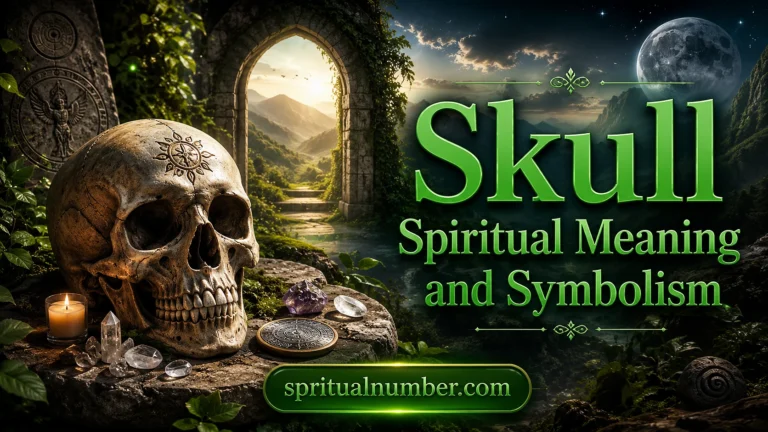
Exploring Skull Spiritual Meaning and Symbolism reveals a powerful symbol connecting death, life, and transformation. Across human history, skulls represented strength, identity, and deeper spiritual meaning through ancient cultures.
Many ancient Aztecs, Mayans, and Celtic traditions viewed skulls within sacred beliefs. These historical interpretations show connections between rebirth, courage, and the cycle of life and death.
Today, the skull remains a universal symbol in modern culture, art, and rituals. It appears in skull tattoos, gothic jewelry, and religious art expressing personal beliefs. From ancestors to modern spirituality, skulls inspire reflection, curiosity, and higher wisdom. They remind people about mortality, human consciousness, and the eternal soul.
Also Read This: Two Doves Spiritual Meaning and Symbolism
Quick Answer
In skull spiritual meaning and symbolism, the skull mainly represents mortality, transformation, and protection. In the USA, it often shows up in tattoos, fashion, and holiday themes tied to courage and identity. Around the world, it can also point to rebirth, wisdom, and honoring ancestors.
TL;DR
• The skull represents mortality, transformation, and inner strength.
• Ancient cultures often treated skulls as sacred, not evil.
• In the USA, skulls appear in tattoos, fashion, and pop culture.
• Mexican and Latin traditions link skulls to remembrance and celebration.
• Buddhist and Hindu views tie skulls to impermanence and awakening.
• Modern meaning blends fear-based imagery with personal empowerment.
What the Skull Symbol Really Represents
Before looking at history, it helps to understand how the skull appears as a symbol. This overview matters because small details, like color or decoration, change how people read its meaning.
Artists and designers use skulls in many different styles. Each version sends a slightly different message, and Americans quickly pick up on these visual differences.
• A plain white or gray skull often signals mortality and reflection.
• A skull with crossbones usually points to danger or a warning.
• A decorated sugar skull represents celebration and remembrance.
• A skull paired with flowers softens the image into rebirth and beauty.
• A skull in bold black ink often signals rebellion or personal edge.
Historical Background and Ancient Roots
Skull symbolism did not start as something scary or evil. It goes back to some of the earliest human societies, long before modern horror imagery took shape. Understanding these roots helps explain why the symbol still feels so powerful today.
Ancient and Pre-Christian Views
In Neolithic times, people sometimes decorated or kept skulls to honor ancestors. This practice suggests the skull was treated with respect, not fear.
In pre-Christian Europe, skulls were tied to mortality, the afterlife, and the ongoing cycle of life and death. This is very different from the villain imagery skulls later picked up in pop culture.
Mythology and Ritual Use
• Mesoamerican cultures, including the Aztecs, used skulls in sacred rituals.
• Celtic tradition treated the skull as a seat of power and the soul’s home.
• Skulls were sometimes used as offerings or gifts to gods.
• Later, Renaissance art used skulls to remind viewers of life’s shortness.
Skull Symbolism in the USA
The skull holds a bold and complex place in American culture. Its meaning here blends fashion, rebellion, remembrance, and personal identity.
By the 19th century, skull imagery had already spread into American secret societies and explorer groups. It was often used as a symbol of courage or independence, not fear.
Today, the skull shows up everywhere, from biker culture and rock music to home decor and streetwear. Many Americans now see it as a symbol of resilience rather than something purely negative.
• The skull often signals boldness and a strong sense of identity.
• It can represent facing hard truths without looking away.
• Many see it as a reminder to live fully and with purpose.
• It also appears as a symbol of independence and rebellion.
Skull Symbolism at a Glance: A Quick Reference Table
This table breaks down a few common skull images and what they tend to mean in the USA today.
| Context | Meaning in the USA | Common Associations | Notes |
| Plain skull | Mortality and reflection | Awareness, honesty, depth | Common in tattoos and art |
| Skull and crossbones | Warning or danger | Caution, rebellion, edge | Used on labels and gear |
| Sugar skull | Celebration and remembrance | Family, joy, honoring loved ones | Tied to Day of the Dead |
| Skull with flowers | Rebirth and balance | Beauty, softness, renewal | Popular in modern tattoos |
| Skull with wings | Freedom after struggle | Transformation, courage | Common in biker and rock culture |
Skull Symbolism in Mexican and Latin American Culture
Few traditions shape modern skull imagery in the USA as much as Mexican culture does. This influence deserves its own look, since it reshaped how many Americans view the symbol.
During Día de los Muertos, or Day of the Dead, families use colorful sugar skulls to honor loved ones who have passed. Instead of representing fear, these skulls represent joy, memory, and connection.
• Sugar skulls, or calaveras, celebrate life instead of only mourning death.
• Bright colors and floral designs soften the skull’s traditional harshness.
• Families often display skulls as a way to welcome spirits home.
• This tradition has strongly influenced skull art across the USA.
Cross-Cultural and Global Spiritual Meanings
Beyond Mexico, many other cultures give the skull a spiritual, not sinister, meaning. These global views are worth a brief look, since they shape how the symbol is understood worldwide.
• Buddhist traditions use skull imagery, like the kapala cup, to teach impermanence.
• Hindu practices sometimes use skulls to represent letting go of the ego.
• African traditions connect skulls to honoring ancestors and spirit ties.
• Western mysticism ties skulls to transformation and hidden knowledge.
Across these traditions, the skull rarely stands only for death. Instead, it often points toward change, humility, and a deeper spiritual awareness.
Emotional and Psychological Meaning of the Skull
Beyond religion and history, the skull touches something personal for many people. Its symbolism often mirrors real emotions tied to fear, courage, and self-reflection.
Because the skull represents something every person shares, it naturally invites deep, personal meaning. This is part of why so many people connect with it on an emotional level.
• A reminder to face fear instead of avoiding it.
• A sense of resilience after loss or hardship.
• Encouragement to live with honesty and purpose.
• A feeling of personal power and quiet confidence.
• A prompt to release old habits and start fresh.
Skull Symbolism in Dreams
Dreaming about a skull is fairly common, and people often want to understand what it means. While dream meanings are personal, a few patterns come up often.
• A calm skull in a dream may point to acceptance or closure.
• A frightening skull might reflect stress or fear of change.
• Multiple skulls can suggest a need to process loss or grief.
• A glowing or decorated skull may signal spiritual growth.
These interpretations are not strict rules. Instead, they offer a starting point, and many people find it helpful to sit with the feelings the dream brought up.
Modern Usage: Tattoos, Fashion, and Social Media
Today, skull symbolism shows up constantly in everyday American life. This section looks at how people use skull imagery in style, art, and online spaces.
Tattoos and Fashion
Skull tattoos remain one of the most requested designs in the USA. People often choose them to mark strength, survival, or a major life change.
• Realistic skull tattoos often represent a direct look at mortality.
• Sugar skull tattoos usually honor family or a lost loved one.
• Skull and rose combinations balance darkness with beauty.
• Minimalist skull outlines are popular for subtle, modern designs.
Social Media and Pop Culture
Online, skull imagery pairs naturally with bold, confident branding. Music, fashion, and art keep this symbol constantly visible to new audiences.
• Skull logos are common in rock, punk, and streetwear branding.
• Skull-themed avatars often signal edge or individuality.
• Halloween content leans heavily on skull imagery every year.
• Artists like Andy Warhol helped push skulls into mainstream pop art.
Skull Symbolism, Holidays, and American Identity
The skull connects strongly to certain American holidays and cultural moments. This link helps explain why the image feels so familiar every year.
Halloween is the clearest example, turning skulls into a seasonal decoration tied to fun and mild fright. Meanwhile, Day of the Dead celebrations, now widely recognized in the USA, reframe the skull as a symbol of love and memory.
• Halloween uses skulls mostly for playful, spooky decoration.
• Day of the Dead uses skulls to honor and remember loved ones.
• Biker and rock culture use skulls as symbols of freedom.
• Military and sports groups sometimes use skulls to signal toughness.
Misunderstandings, Misuse, and Controversies
Like many strong symbols, the skull can be misread or misused. It helps to separate its traditional, respectful meanings from harmful ones.
Most skull symbolism centers on mortality, remembrance, and transformation. However, some hate groups and extremist movements have adopted certain skull designs to signal violence or intimidation.
This kind of misuse does not reflect the symbol’s traditional or spiritual meaning. Context matters a great deal. A sugar skull at a family altar is not the same as an emblem used to promote hate.
• Traditional skull symbolism focuses on reflection, not violence.
• Certain skull designs have been misused by hate-based groups.
• Cultural skull traditions, like Day of the Dead, deserve respect, not stereotyping.
• Understanding context helps separate meaningful use from harmful use.
How Skull Symbolism Has Shifted Over Time
Skull symbolism has changed a great deal across history. Looking at this shift helps explain why older and newer meanings can feel so different.
In early history, skulls were mostly sacred or reflective symbols. Over time, horror movies and edgy fashion trends pushed the image toward danger and rebellion, though older, deeper meanings never fully disappeared.
• Ancient views leaned sacred, reflective, and connected to ancestors.
• Medieval and Renaissance art used skulls as reminders of mortality.
• Modern pop culture leaned into skulls as edgy or rebellious.
• Today’s use blends fashion, memory, and personal empowerment.
FAQs
What is the Skull Spiritual Meaning and Symbolism?
The Skull Spiritual Meaning and Symbolism represents death, life, transformation, and the cycle of life and death. It is a powerful symbol of rebirth, wisdom, and human reflection.
What does a skull symbolize in different ancient cultures?
In ancient cultures, skulls symbolized mortality, strength, and spiritual meaning. The ancient Aztecs, Mayans, and other traditions connected skulls with sacred beliefs and rituals.
What is the spiritual meaning of skull tattoos?
Skull tattoos often represent change, identity, courage, and self-expression. Many people use tattoo art as a personal symbol of growth and transformation.
Are skulls connected to religion and spiritual traditions?
Yes, skulls appear in religion and spiritual traditions as symbols of impermanence, higher wisdom, and the eternal soul. They are used in rituals, artwork, and cultural celebrations.
Why is the skull considered a universal symbol?
The skull is a universal symbol because it reflects human consciousness, mortality, and the connection between birth and creation cycle. It encourages reflection, curiosity, and understanding of life’s deeper meaning.
Conclusion
The Skull Spiritual Meaning and Symbolism reflects a timeless connection between life, death, and transformation across human history. This powerful symbol represents rebirth, higher wisdom, and the cycle of life and death through many spiritual traditions. Understanding skull symbolism reveals deeper ideas about mortality, identity, and the eternal soul while honoring diverse cultural meanings.

