

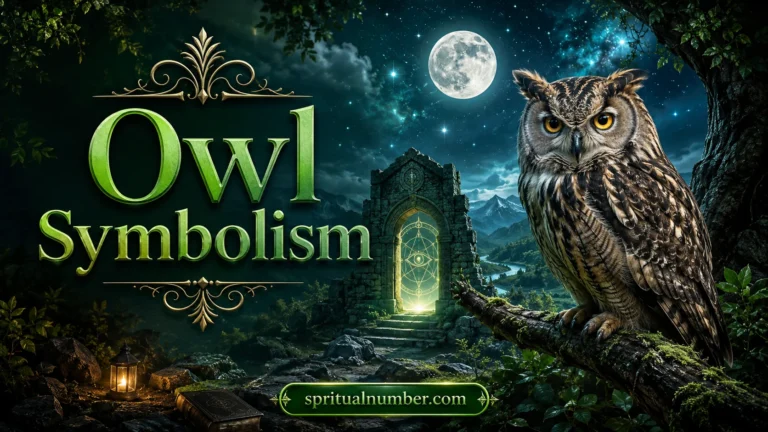
owl symbolism and owl meaning reflect deep cultural history and spiritual insight. owls represent wisdom and watchfulness through silent flight and night hunting behavior. Their silent flight, keen senses, and forward-facing eyes reveal powerful visual presence.
Many cultures, including Native American traditions and ancient Egyptians, view them as messengers. They symbolize intuition, hidden truths, and guidance during periods of deep darkness. The owl totem connects human awareness with sacred wisdom and spiritual interpretation.
In myths, nocturnal birds like owls symbolize transformation and mysterious spiritual guidance. Their haunting calls and bird of prey nature evoke fear and fascination. Across Celts, ancient Egyptians, and cultures, owls connect with mysticism and magic.
Dreams of owls often signal interpretation, guidance, and awareness of hidden meanings. Their head rotation 270 degrees enhances perception and deep observation skills naturally. Modern perspectives link owls with intelligence, solitude, and reflection in daily life.
Also read this: Snake Crossing Your Path Meaning: Symbolism Explained
Quick Answer
Owl symbolism represents wisdom, intuition, watchfulness, and transformation, with meanings shaped by ancient traditions, spiritual beliefs, and modern culture. Across different societies, owls symbolize hidden knowledge, guidance, and reflection, while reminding us that their interpretation varies by cultural context, making them enduring symbols of insight and personal growth.
What an Owl Looks Like and Why It Feels So Symbolic
The physical traits people notice
Owls stand out because they do not look like ordinary birds. They have large heads, forward-facing eyes, curved beaks, and soft feathers that help them fly almost silently. Many species are nocturnal, which adds to their sense of secrecy and control.
Why those traits matter
Those features shape the symbol itself. A bird that sees well in the dark and moves without sound feels like a watcher, a keeper of secrets, or a judge who misses nothing. In American culture, that physical design makes the owl feel naturally tied to knowledge and caution.
• Large eyes suggest awareness.
• Silent wings suggest discretion.
• Night habits suggest mystery.
• A still posture suggests patience.
• A fixed gaze suggests focus.
Ancient Roots of Owl Meaning
Prehistoric and early symbolic use
The owl’s symbolic life is older than most modern readers realize. Some scholarly treatments trace owl meaning back to prehistory, where it could represent death, rebirth, and the strange power of the night. Those older ideas did not disappear; they simply changed shape over time.
Athena and Greek wisdom
Ancient Greece gave the owl one of its most famous meanings. The owl was linked to Athena, the goddess of wisdom and patron of Athens, and Greek coins often showed her with the bird. That association helped turn the owl into a long-lasting sign of knowledge, strategy, and clear judgment.
Rome and later classical use
The Roman world inherited that association through Minerva, the Roman counterpart of Athena. At the same time, owls could still carry darker meanings in some Roman stories, which shows an important pattern: even early on, the owl was never only one thing. It could mean wisdom, but it could also warn of death or bad fortune.
How Medieval Europe Changed the Meaning
Night, darkness, and warning signs
In medieval Europe, the owl often became a more negative symbol. Its night habits made it an easy image for darkness, hidden sin, and unease. Because of that, owls appeared in art and manuscripts as creatures tied to fear rather than insight.
Unfair religious associations
Some medieval Christian writers also used owls in anti-Jewish imagery, which is a reminder that symbols can be misused in harmful ways. In those cases, the owl was not just a bird; it was turned into a tool for prejudice. That history matters because it shows how a symbol can be twisted into something cruel.
Owl Symbolism in the USA
Wisdom, learning, and quiet observation
In the United States, the owl is most often understood as a symbol of wisdom. That idea comes partly from the Greek tradition, but American institutions have reinforced it for generations. The Smithsonian’s Badge of Office, for example, features the owl of Athena as a symbol of wisdom.
Where Americans see owls today
Americans encounter owl imagery in schools, libraries, nature groups, fall decor, and seasonal art. The bird also appears in logos, classroom themes, nursery decorations, and gifts that suggest learning or guidance. Because the owl feels both smart and calm, it works well in spaces meant to signal thoughtfulness.
| Context | Meaning in the USA | Common Associations | Notes |
| School or library decor | Learning and knowledge | Books, reading, study time | Very common in educational spaces |
| National or civic symbols | Wisdom and dignity | Athena, scholarship, tradition | Strong in formal institutions |
| Home decor | Quiet intelligence and coziness | Autumn, forest themes, night mood | Often used as a warm accent |
| Halloween or fall art | Mystery and the night | Moon, darkness, forest scenes | Can feel spooky or playful |
| Tattoo design | Intuition and personal insight | Independence, focus, inner guidance | Meaning depends on style and context |
| Wildlife imagery | Respect for nature | Birdwatching, conservation, forests | Often tied to appreciation of birds |
Why this meaning fits American culture
In the U.S., the owl fits a culture that values learning, individual thought, and self-reliance. It can feel academic without being cold, and wise without seeming distant. That balance helps explain why the bird shows up so often in public symbols and private design.
Native American Traditions and Regional Differences
Different tribes, different meanings
It is important not to flatten Native American views into one single belief. In some tribal traditions, owls are associated with death, the spirit world, or warning signs. In other traditions, they can be protectors, messengers, or signs of sacred knowledge.
Respect and context matter
The Peabody collection notes that some tribes see owls as messengers of the spirit world, and some link them to the deceased or to misfortune. It also shows that owl imagery can appear in pottery and ritual art with specific cultural meaning. Because these meanings are tied to living traditions, they should be handled carefully and respectfully.
Cross-Cultural and Spiritual Meanings
Wisdom, protection, and luck
Outside the U.S., owls can carry very different meanings, but wisdom is one of the most widespread. Scholarly and museum sources also describe owls as linked to protection, guidance, and a connection to hidden knowledge. In many places, the owl feels like a guardian that sees what others miss.
Death, ancestors, and mystery
At the same time, owls can also represent death, the spirit world, or messages from beyond. That does not always mean something sinister. In many traditions, it simply reflects the owl’s role as a creature that moves between light and darkness.
Emotional and Psychological Associations
What an owl signals at first glance
An owl often feels calm, alert, and self-possessed. People may read it as a sign of patience, deep thinking, or emotional distance. Because it watches before acting, the owl can also suggest restraint and confidence.
Common moods linked to owls
• Quiet intelligence
• Solitude without fear
• Nighttime mystery
• Careful observation
• Mature judgment
• Spiritual curiosity
Why people relate to that feeling
Many people see themselves in the owl when they value privacy, reflection, or independent thinking. That is one reason the symbol works so well in journals, wall art, and personal tattoos. It gives shape to a mood that feels thoughtful rather than loud.
Modern Uses: Tattoos, Decor, Social Media, and More
Popular design choices
Owl tattoos often use moonlight, feathers, branches, clocks, stars, or books. Those details reinforce ideas like wisdom, time, memory, and inner sight. In decor, the owl often appears in warm autumn tones, woodland scenes, or school-themed spaces.
Why people keep returning to owls
The owl is flexible. It can be cute, serious, ancient, academic, or eerie, depending on the style. That flexibility helps it stay relevant in modern visual culture, where people often want symbols that feel personal but still recognizable.
Misunderstandings, Misuse, and Controversies
Not every owl means wisdom
Some people assume owl symbolism is always positive, but that is not true. In various traditions, the owl can warn of death, bad luck, or spiritual danger. So the same image that feels encouraging in one setting may feel unsettling in another.
When symbolism turns harmful
The medieval history of owls in anti-Jewish imagery is a serious example of misuse. Symbols can be turned into insults, stereotypes, or tools of exclusion when people strip them from context. Today, that is one reason it matters to treat cultural and religious meanings with care.
How Owl Meaning Has Shifted Over Time
From omen to wise teacher
Owl symbolism has moved through many layers. Ancient and pre-Christian traditions could connect it with death and rebirth, Greek culture tied it to wisdom, medieval Europe often darkened it, and modern America mostly restored its wise, reflective side. The owl never lost its mystery, but its emotional tone changed a great deal.
Why the shift stuck in America
American culture tends to favor the owl as a sign of learning, calm intelligence, and thoughtful leadership. Institutions such as the Smithsonian helped cement that image, while bird guides and conservation groups kept the bird visible in daily life. That mix of scholarship and nature has made the owl feel both classic and current.
FAQs
What is the meaning of owl symbolism in different cultures?
Owl symbolism represents wisdom, watchfulness, and deep spiritual awareness across many cultures. In ancient Egyptians and Native American traditions, owls are seen as protectors of sacred wisdom and hidden knowledge. Their silent flight and keen senses strengthen their connection to mystery and insight.
Why are owls associated with wisdom and intuition?
Owls symbolize wisdom because of their ability to see clearly in darkness and sense hidden details. Their strong intuition and quiet hunting style reflect deep awareness and understanding. Many believe they reveal hidden truths and guide inner decision-making.
What does an owl totem symbolize spiritually?
An owl totem represents intuition, sacred wisdom, and the ability to see beyond illusion. It is often linked with transformation and guidance during uncertain times. Many spiritual beliefs see it as a messenger of insight and awareness.
What is the significance of owl sightings or dreams?
Seeing owls in dreams or real life often symbolizes guidance, hidden truths, or life changes. These experiences are linked with nocturnal birds and their mysterious nature. Many interpret them as signs of reflection and spiritual awareness.
How do owls connect with darkness and transformation?
Owls are deeply connected to darkness, representing clarity within uncertainty and change. Their role as nocturnal birds symbolizes transformation and growth through challenges. This association highlights their power as guides through life transitions.
Conclusion
Owl symbolism brings together owl symbolism, wisdom, watchfulness, and sacred wisdom across cultures. In ancient Egyptians and Native American traditions, owls are seen as messengers of hidden truths and intuition. Their silent flight and nocturnal birds nature reflect transformation, guidance, and deeper awareness in darkness. Today, owl meaning continues to represent spiritual insight, reflection, and clarity in everyday life.

