
The Tree of Life tattoo remains a powerful symbolic tattoo with deep cultural significance. Its enduring appeal reflects the Tree of Life meaning through personal growth, spiritual growth, and self discovery. Many people choose this meaningful tattoo to represent their life journey and evolving identity.
The rich Tree of Life symbolism highlights strength, wisdom, balance, and lasting harmony. Through roots and branches, it expresses family connection, ancestry, and cherished ancestral roots. This recognizable tattoo design also symbolizes connection to nature, universal connection, and meaningful interconnectedness.
The fascinating Tree of Life history spans ancient cultures, religious traditions, mythology, and ancient wisdom worldwide. From Christianity, Adam and Eve, and the Garden of Eden to Celtic mythology, Druids, shamans, and Viking mythology, this sacred symbol carries profound meaning. It reflects the cycle of life, life cycle, life death rebirth, and birth growth death rebirth through timeless visual symbolism.
Modern interpretations connect it with spiritual awakening, personal transformation, empowerment, feminine power, and divine feminine energy. Whether created as a minimalist tattoo, nature themed tattoo, or personalized tattoo, it remains a timeless tattoo and meaningful design. For many tattoo enthusiasts and tattoo lovers, it represents growth and renewal, resilience, life purpose, and a hopeful new chapter.
Also read this: Coyote Symbolism: Meaning, History & Modern Use
Quick Answer
A Tree of Life tattoo symbolizes personal growth, strength, wisdom, family connection, and spiritual growth, while reflecting the cycle of life, balance, and connection to nature. Rooted in ancient cultures, religious traditions, and mythology, it represents self-discovery, resilience, and a meaningful life journey, making it a timeless symbol of identity, renewal, and universal interconnectedness.
Overview of the Tree of Life Tattoo
What Does the Design Look Like?
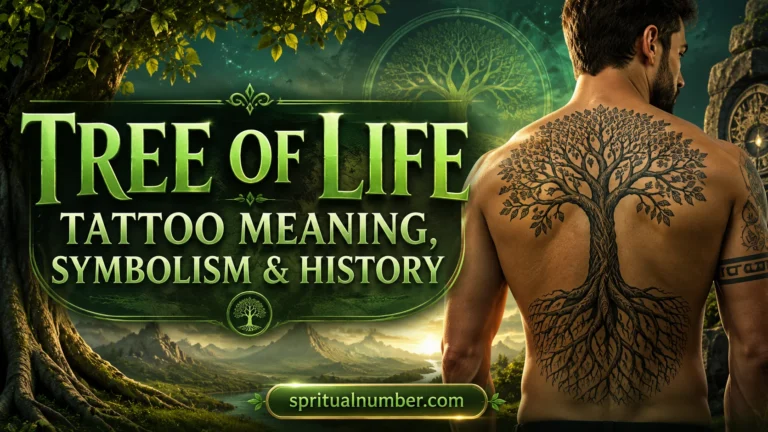
The Tree of Life tattoo typically shows a large tree with spreading branches and visible roots. Many designs place the tree inside a circle to symbolize wholeness and continuity.
Common visual elements include:
• Deep roots extending beneath the earth.
• Wide branches reaching toward the sky.
• Circular frames representing life’s cycles.
• Leaves symbolizing growth and renewal.
• Seasonal variations showing different life stages.
• Celtic knotwork or geometric patterns.
The balance between roots and branches is often the most important part of the design. It visually represents the connection between where we come from and where we are going.
Why People Choose It
Many people see the symbol as both personal and universal. It can honor family heritage while also representing individual growth.
Because of this flexibility, no two Tree of Life tattoos carry exactly the same meaning.
Historical Origins of the Tree of Life
Ancient Roots
The Tree of Life appears in some of humanity’s oldest stories and artistic traditions. Ancient civilizations often viewed sacred trees as bridges connecting heaven, earth, and the underworld.
Historical examples include:
• Sacred trees in Mesopotamian artwork.
• Ancient Egyptian representations of divine trees.
• Norse mythology’s world tree, Yggdrasil.
• Sacred trees in early Persian traditions.
• Symbolic trees in ancient Mediterranean cultures.
These traditions differed in details, yet many shared a belief that trees represented life, wisdom, and cosmic order.
Evolution Through Time
As cultures interacted, the symbolism expanded. Religious traditions, folklore, and mythology adopted tree imagery in different ways.
Over centuries, the symbol shifted from a sacred religious image into a broader cultural symbol. Today, many people appreciate it regardless of religious affiliation.
Tree of Life Tattoo Meaning
Core Symbolism
The Tree of Life carries several major meanings that remain popular today.
• Growth through life’s experiences.
• Strength during challenges and hardship.
• Connection to family and ancestors.
• Wisdom gained over time.
• Balance between physical and spiritual life.
• Renewal after loss or change.
Unlike symbols with a single interpretation, the Tree of Life allows multiple meanings to exist together.
Life’s Journey
Many Americans view the tattoo as a visual story of life itself. The roots represent the past, the trunk symbolizes the present, and the branches point toward future possibilities.
This interpretation makes the design especially meaningful after major life transitions.
Tree of Life Tattoo Symbolism in the USA
Why Americans Connect With It
In the United States, the Tree of Life often reflects individual identity while also emphasizing family connections. American tattoo culture frequently values designs that tell personal stories.
The symbol resonates because it combines independence with belonging.
Common American Associations
| Context | Meaning in the USA | Common Associations | Notes |
| Family | Heritage and ancestry | Family roots | Multi-generational symbolism |
| Recovery | Personal resilience | Overcoming hardship | Popular after life challenges |
| Spirituality | Inner growth | Self-discovery | Often non-denominational |
| Memorial Tattoos | Remembering loved ones | Legacy and remembrance | Deeply personal meaning |
| Nature Appreciation | Environmental connection | Respect for nature | Modern interpretation |
Influence of Modern Culture
The symbol has appeared in books, films, artwork, and digital media. Because of this exposure, many Americans recognize the Tree of Life even without knowing its historical origins.
Its widespread familiarity contributes to its continued popularity.
Spiritual Meaning of the Tree of Life Tattoo
Connection and Unity
Many spiritual interpretations focus on interconnectedness. The tree demonstrates how separate branches remain connected through one trunk and root system.
This symbolism often reflects ideas such as:
• Unity among people.
• Connection with nature.
• Harmony between mind and body.
• Spiritual growth and awareness.
• The cycle of birth and renewal.
Personal Spirituality
Modern spiritual seekers frequently adopt the Tree of Life as a symbol of self-discovery rather than formal religious belief.
As a result, it has become one of the most versatile spiritual tattoo designs in contemporary America.
Tree of Life in Different Cultures
Celtic Traditions
The Celtic Tree of Life is among the most recognizable versions today. Ancient Celtic cultures viewed trees as powerful symbols of wisdom, protection, and connection to the natural world.
Many tattoo designs incorporate Celtic knots to emphasize eternity and interconnectedness.
Norse Symbolism
In Norse mythology, Yggdrasil served as the great world tree connecting different realms of existence.
This interpretation emphasizes:
• Cosmic order.
• Endurance through adversity.
• Knowledge and wisdom.
• Connection between worlds.
Other Cultural Perspectives
Various cultures developed their own sacred tree traditions. While details differ, common themes include life, fertility, growth, and continuity.
These shared ideas help explain why the symbol remains meaningful across societies.
Psychological Meaning of the Tree of Life Tattoo
What It Represents Emotionally
Psychologically, trees often symbolize stability and development. Their growth mirrors the way people mature through experiences.
Many people associate the Tree of Life with feelings such as:
• Security and grounding.
• Hope for the future.
• Confidence and resilience.
• Personal achievement.
• Belonging and connection.
Identity and Self-Expression
Tattoos often serve as personal narratives. The Tree of Life allows individuals to express values, experiences, and goals without relying on words.
Because of this, it frequently becomes a lifelong symbol of identity.
Family and Ancestry Symbolism
Honoring Family Roots
One of the most popular interpretations centers on family heritage. The roots symbolize ancestors, while branches represent future generations.
Many family-themed designs include:
• Names woven into roots.
• Birthdates within branches.
• Family initials.
• Memorial elements.
• Generational symbols.
Legacy and Continuity
The tattoo can remind wearers that they are part of a larger story. It acknowledges both the influence of the past and responsibility toward future generations.
This meaning remains especially popular in American family-centered tattoo traditions.
Popular Tree of Life Tattoo Designs
Celtic Tree of Life
The Celtic version remains one of the most requested styles due to its intricate beauty and historical associations.
Realistic Tree Designs
These tattoos focus on detailed bark, leaves, and natural textures.
Minimalist Versions
Minimalist designs appeal to people seeking simplicity while maintaining symbolic depth.
Popular design variations include:
• Oak tree designs.
• Willow tree interpretations.
• Circular Tree of Life symbols.
• Watercolor styles.
• Geometric compositions.
• Blackwork tattoos.
Each style influences the visual impact while preserving core symbolism.
Tree of Life Tattoos in Modern Culture
Social Media and Personal Branding
The symbol frequently appears across digital platforms where users share meaningful tattoos and personal stories.
Its popularity stems from being both visually appealing and emotionally significant.
Home Décor and Jewelry
Beyond tattoos, the Tree of Life appears in:
• Wall art and home decoration.
• Necklaces and pendants.
• Wedding gifts.
• Family keepsakes.
• Spiritual accessories.
This widespread use reinforces its status as a modern cultural symbol.
Common Misunderstandings and Controversies
Is It a Religious Symbol?
One common misconception is that the Tree of Life belongs exclusively to one religion.
In reality, many cultures and traditions have used sacred tree imagery. While some religious interpretations exist, modern use is often broader and more personal.
Cultural Context Matters
Because the symbol appears in multiple traditions, meanings can vary depending on the design and context.
Understanding these cultural backgrounds helps people appreciate the symbol respectfully.
Modern Misuse
Occasionally, online discussions oversimplify the Tree of Life by assigning a single meaning. However, its historical richness comes from its many interpretations rather than one universal definition.
How the Meaning Has Changed Over Time
From Sacred Symbol to Personal Symbol
Ancient societies often viewed sacred trees as cosmic or divine entities. Their meanings were closely tied to mythology and religion.
Today, many people focus more on personal growth and individual experiences.
Revival in Contemporary Culture
Recent decades have brought renewed interest in symbolism, mindfulness, and heritage. Consequently, the Tree of Life has experienced a strong revival in tattoo culture.
Modern interpretations often blend ancient traditions with contemporary values.
FAQs
What does a Tree of Life tattoo symbolize?
A Tree of Life tattoo represents personal growth, strength, wisdom, and the ongoing life journey. Its deep Tree of Life symbolism reflects balance, harmony, spiritual connection, and the cycle of life shared by all living beings.
What is the spiritual meaning of a Tree of Life tattoo?
The Tree of Life meaning is closely linked to spiritual growth, spiritual awakening, self discovery, and spiritual alignment. Many people view it as a sacred symbol that encourages personal transformation, enlightenment, and a stronger universal connection.
How is the Tree of Life connected to family and ancestry?
The roots and branches of the Tree of Life tattoo symbolize family connection, family roots, ancestry, and ancestral roots. This meaningful design serves as a tribute to cultural heritage, shared life experiences, and lasting family bonds.
What are the historical origins of the Tree of Life symbol?
The Tree of Life history can be traced through ancient cultures, ancient traditions, religious traditions, and diverse belief systems. It appears in Christianity, Biblical symbolism, Adam and Eve, the Garden of Eden, Celtic mythology, Druids, Viking mythology, and other forms of mythology.
Why is the Tree of Life a popular tattoo design today?
A Tree of Life tattoo remains a timeless tattoo because of its rich visual symbolism, aesthetic appeal, and meaningful message. Whether chosen as a minimalist tattoo, nature themed tattoo, or personalized tattoo, it reflects growth and renewal, resilience, life purpose, and individual self expression.
Conclusion
A Tree of Life tattoo is more than beautiful body art because it carries deep Tree of Life meaning, rich Tree of Life symbolism, and a fascinating Tree of Life history. Rooted in ancient cultures, religious traditions, and mythology, this meaningful tattoo represents personal growth, spiritual growth, family connection, strength, wisdom, and the cycle of life.
Its powerful roots and branches reflect ancestry, connection to nature, balance, harmony, and lasting interconnectedness. Whether chosen for self discovery, personal transformation, or a new life journey, this timeless tattoo remains a meaningful expression of life purpose, resilience, growth and renewal, and enduring universal connection.

