

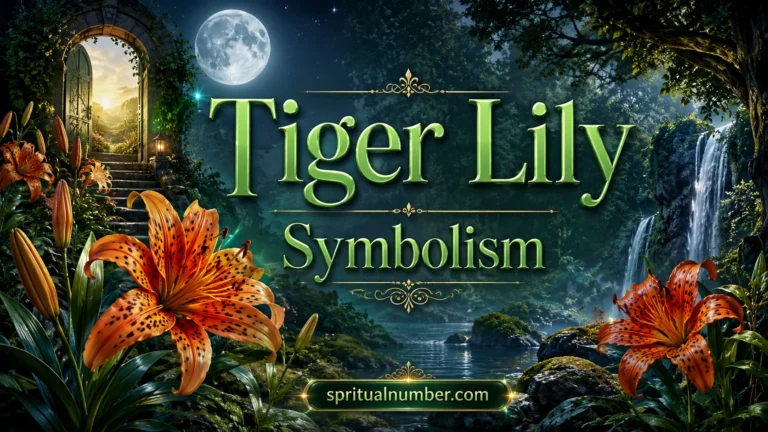
The tiger lily symbolism reveals deep cultural meaning and spiritual insight today. Understanding tiger lily meaning and spiritual meaning of tiger lily connects nature symbolism. The tiger lily flower shows orange petals and black spots in nature.
It carries spiritual significance through transformation, strength, inner resilience, and mystical communication. This flower represents prosperity, inner strength, guidance, and a spiritual journey. Its tiger lily history blends mythology, cross-cultural traditions, and ancient flowers worldwide.
Modern modern insight tiger lily appears in United States gardens and wild landscapes. It symbolizes confidence, independence, emotional intensity, and presence personality flower. In lily symbolism, lily colors meaning, elegance flowers, and grace symbolism thrive.
Courage, passion, bold energy, and tiger lilies bold blooms define fiery orange color meaning. Botanical name Lilium lancifolium belongs to Asian lily species, naturalized United States perennial flowers. It reflects resilience endurance, self belief, self expression, and flower symbolism cultures.
Also read this: Grey and Black Feather Meaning: Symbolism Explained
Quick Answer
The Tiger Lily symbolizes strength, transformation, resilience, confidence, and independence, drawing on its rich history, spiritual meaning, and cross-cultural symbolism. From ancient traditions to modern use in the United States, this bold flower represents personal growth, emotional strength, and the courage to embrace individuality while inspiring renewal and self-expression.
What Is Tiger Lily? Overview and Appearance
This section explains what the Tiger Lily is and why its appearance is so symbolic. In the USA, its visual traits strongly shape how people interpret its meaning in everyday life and culture.
Physical Features and Visual Identity
The Tiger Lily stands out because of its dramatic appearance. Its bright orange petals often curve backward, revealing dark black or deep purple spots. This creates a wild, almost untamed look.
• Bright orange or reddish-orange petals
• Distinct black or dark speckles on petals
• Curved backward petal shape
• Tall stems with multiple blooms
• No fragrance, yet highly visual impact
Natural Growth and Habitat
Tiger Lilies grow naturally in parts of Asia and North America. However, they are now widely cultivated in American gardens.
They thrive in summer months and often grow along roadsides, gardens, and open fields. Their ability to grow in various conditions adds to their symbolic connection with resilience.
Historical Origins and Botanical Background
Understanding the history of the Tiger Lily helps explain why it carries such strong symbolic meaning today. Its journey from wild flower to cultural symbol spans centuries.
Early Botanical Records
The Tiger Lily originates primarily from East Asia, especially regions like China, Korea, and Japan. It was later introduced to Europe and North America through botanical trade.
Over time, it became popular in ornamental gardening due to its striking appearance and easy growth.
Spread to Western Gardens
In the 18th and 19th centuries, Tiger Lilies became widely cultivated in Western gardens. In the United States, they quickly gained popularity as decorative flowers.
• Introduced through botanical exploration
• Gained popularity in Victorian-era gardens
• Valued for low maintenance and bold color
• Symbol of exotic beauty in Western horticulture
Ancient and Mythological Associations
This section explores how older traditions shaped the symbolic meaning of Tiger Lilies. These interpretations still influence how people view the flower today.
Symbolism in Asian Traditions
In parts of East Asia, lilies often symbolize purity, renewal, and prosperity. The Tiger Lily, with its bold coloring, also represents confidence and strong life energy.
It is sometimes connected to protection and warding off negative influences.
Myth and Folklore Connections
In folklore, bright wildflowers like the Tiger Lily were often seen as symbols of life force and transformation. Their strong coloring made them associated with vitality and emotional intensity.
These early beliefs contributed to the flower’s powerful symbolic identity.
Tiger Lily in Native American and Early North American Context
In North America, wild lilies—including tiger lilies—have been part of natural landscapes for centuries. Their meaning often developed through observation rather than formal symbolism.
Natural Symbolism in Early Communities
Early communities often viewed wild lilies as symbols of survival and seasonal change. Their ability to bloom in harsh environments made them represent resilience.
Connection to Land and Nature Cycles
Tiger Lilies were also seen as part of natural cycles, especially summer growth. This made them symbols of abundance and the strength of nature.
Symbolism in the United States Today
In modern American culture, the Tiger Lily carries layered meanings shaped by gardening, media, and personal interpretation. It is often chosen for both emotional and aesthetic reasons.
Core Meanings in the USA
In the United States, Tiger Lilies are most commonly associated with strength, independence, and bold emotional expression.
They are often given as gifts during moments of encouragement or personal change.
Cultural and Everyday Associations
| Context | Meaning in the USA | Common Associations | Notes |
| Gardens | Natural beauty and resilience | Summer landscapes | Easy-to-grow ornamental flower |
| Gifts | Encouragement and support | Personal growth | Often used in uplifting moments |
| Art | Bold emotional expression | Passion and identity | Used in paintings and design |
| Weddings | Confidence and individuality | Strong relationships | Less traditional but meaningful |
| Memorials | Strength in remembrance | Life cycles | Represents lasting memory |
Modern Cultural Identity
Today, the Tiger Lily is often seen as a symbol of individuality. It represents people who are strong, expressive, and unafraid to stand out.
Tiger Lily in Love, Femininity, and Relationships
This section explores how the flower connects to emotional relationships and feminine symbolism in the USA.
Passion and Emotional Depth
The Tiger Lily is often linked with strong emotional energy. In relationships, it can symbolize deep passion and intense connection.
It is not a soft or delicate symbol, but a bold one.
Feminine Strength and Independence
Many people associate the Tiger Lily with strong feminine energy. It represents confidence, independence, and self-expression.
• Emotional strength in relationships
• Independent personality traits
• Bold and expressive femininity
• Non-traditional beauty standards
Emotional and Psychological Meanings
The Tiger Lily has strong psychological associations because of its bold color and shape. It often reflects inner emotional states.
Confidence and Self-Expression
The bright orange color is linked with confidence and visibility. People often see it as a symbol of being unapologetically oneself.
Inner Strength and Resilience
Because it grows in different environments, it also represents emotional endurance. It suggests the ability to thrive despite challenges.
Spiritual and Cross-Cultural Interpretations
Across cultures, lilies carry different spiritual meanings. The Tiger Lily adds a more intense emotional layer to these interpretations.
Eastern Symbolism
In some Eastern traditions, lilies represent renewal and life energy. The Tiger Lily’s boldness adds a sense of power and vitality.
Western Spiritual Views
In Western interpretations, lilies can symbolize purity and remembrance. The Tiger Lily shifts this meaning toward strength and emotional transformation.
Tiger Lily in Tattoos and Body Art
In the USA, the Tiger Lily is a popular tattoo design because of its bold shape and meaning.
Tattoo Symbolism
People often choose Tiger Lily tattoos to represent personal strength and emotional growth.
• Overcoming hardship
• Celebrating individuality
• Representing feminine strength
• Marking personal transformation
• Expressing bold personality
Artistic Style Variations
Tattoo designs often emphasize bright colors and flowing petals. Some styles combine realism with abstract elements to enhance meaning.
Tiger Lily in Art, Literature, and Pop Culture
The Tiger Lily appears frequently in creative expression. It is used to symbolize both beauty and emotional depth.
Visual Art and Design
Artists often use Tiger Lilies to represent contrast—beauty mixed with intensity. The flower’s dramatic look makes it visually powerful.
Literary and Cultural References
In literature, flowers like the Tiger Lily are often used to represent strong characters or emotional turning points.
Seasonal and Holiday Associations
Tiger Lilies are strongly connected to summer in the United States. Their blooming season influences how they are symbolically viewed.
Summer Symbolism
They bloom during warm months, making them symbols of energy and growth.
Emotional Seasonal Meaning
Summer associations also connect them to freedom, expansion, and emotional openness.
Misunderstandings and Controversies
Although generally positive, the Tiger Lily can sometimes be misunderstood.
Symbol Misinterpretation
Some people assume all lilies carry the same meaning. However, the Tiger Lily is more intense and expressive.
Cultural Overgeneralization
At times, symbolic meanings from one culture are incorrectly applied to all contexts. This can reduce the flower’s rich cultural depth.
Shifts in Meaning Over Time
The symbolism of the Tiger Lily has evolved significantly over centuries.
From Wild Flower to Symbol
Originally a wild plant, it became a cultivated ornamental flower. Over time, it gained symbolic associations with identity and emotion.
Modern Interpretations
Today, it is less about tradition and more about personal meaning. People choose it based on emotional resonance rather than fixed symbolism.
How People Use Tiger Lily Today
In modern life, the Tiger Lily appears in many everyday settings. Its symbolism continues to evolve with personal and cultural expression.
Modern Uses and Expressions
People use Tiger Lilies in multiple meaningful ways today.
• Home decoration for bold natural aesthetics
• Gifts symbolizing encouragement and strength
• Garden design for vibrant summer color
• Tattoos representing personal transformation
• Photography and social media aesthetics
FAQs
What is tiger lily symbolism and tiger lily meaning?
The tiger lily symbolism reflects powerful transformation, strength, and deep spiritual significance in nature. The tiger lily meaning highlights inner resilience, confidence, and independence in personal growth. This flower represents emotional depth and a strong connection to life’s natural cycles.
What is the spiritual meaning of tiger lily?
The spiritual meaning of tiger lily is linked with spiritual significance, inner awakening, and higher guidance on the spiritual journey. It reflects self belief, emotional intensity, and personal evolution. Many see it as a symbol of inner clarity and emotional balance.
What is the tiger lily history and cultural significance?
The tiger lily history is rooted in mythology and cross-cultural traditions across Asia and beyond. It is associated with China Japan Korea Russian Far East cultural beliefs and ancient floral symbolism. Over time, it gained meaning through 3000 years symbolism of life, death, and devotion.
What is modern insight tiger lily in United States gardens?
The modern insight tiger lily shows its popularity in United States gardens and natural landscapes. As naturalized United States and perennial flowers, it symbolizes resilience endurance and growth. The Lilium lancifolium species represents strength, beauty, and adaptability in home gardens USA.
What do tiger lily colors and flower traits mean?
The tiger lily flower is known for orange petals, black spots, and vibrant appearance. Its lily colors meaning includes fiery orange color meaning, elegance flowers, and bold emotional expression. As part of Asian lily species, it reflects beauty, strength, and natural artistic symbolism.
Conclusion
The tiger lily symbolism reflects deep emotional and spiritual layers connected to transformation, strength, inner resilience, and lasting spiritual significance in human experience. The tiger lily meaning and spiritual meaning of tiger lily highlight independence, courage, and a powerful sense of personal growth rooted in lily symbolism. The tiger lily history spans ancient mythology and cross-cultural traditions, shaping its meaning across generations and cultures. In modern times, modern insight tiger lily shows its presence in United States gardens, where the tiger lily flower and Lilium lancifolium represent beauty, adaptability, and emotional strength. With its striking orange petals and black spots, this flower continues to inspire confidence, resilience, and bold natural expression in everyday life.

