

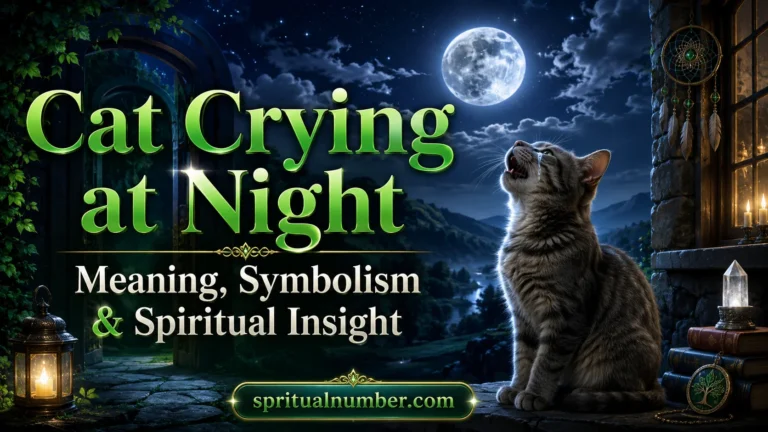
People often notice cat crying at night during quiet mysterious evenings. This behavior carries spiritual meaning, symbolism, and deeper emotional insight for many cultures. Many interpret nocturnal cries as messages from unseen world or hidden truths. In United States, modern interpretations blend folklore, psychology, and everyday animal behavior. These spiritual messages often connect intuition, emotional landscape, and spiritual insight together.
Some cat meowing at night or cat yowling at night relates to behavior. Experts explain excessive meowing, hunger, stress, or attention seeking as common causes. Veterinarian advice suggests checking illness when night vocalisation disrupts normal sleep patterns. Some view spiritual intuition, warning of misfortune, or universe message within sounds. Trust instincts during spiritual journey ahead, reflecting emotional impact and personal reflection.
Also read this: Orange and Black Butterfly Meaning in the USA
Quick Answer
Cat crying at night is commonly interpreted through both spiritual meaning and natural behavior, symbolizing intuition, emotional awareness, transformation, and possible spiritual messages, while also having practical causes such as stress, hunger, or communication. Across cultures and modern American perspectives, it encourages balancing spiritual insight with an understanding of real animal behavior for a clearer and more meaningful interpretation.
Overview of Cat Crying at Night
This section explains what the sound typically refers to and how people recognize it in daily life. It also explores why it stands out more at night when everything is quiet and still.
What the Sound Usually Means
A cat crying at night usually refers to vocalizations like meowing, yowling, or calling. These sounds can vary in intensity and tone.
• Loud, drawn-out meows in quiet spaces
• Repeated calls during nighttime hours
• High-pitched sounds that feel emotional
• Echoing cries in empty neighborhoods
• Sudden vocal bursts without visible cause
Why It Feels Symbolic
Nighttime naturally heightens emotional perception. Because of silence and darkness, even ordinary sounds feel meaningful. As a result, people often assign deeper meaning to it.
What Does Cat Crying at Night Symbolize in America
In the United States, this phenomenon is often interpreted through emotional and intuitive lenses. While not universally believed as spiritual, it still carries symbolic weight.
Common American Interpretations
People often associate it with:
• Emotional distress or loneliness
• Intuition or heightened awareness
• Unexpected change or transition
• A reminder to pay attention to surroundings
• Mystery or unseen energy in the environment
Cultural Influence in Modern Life
Movies, books, and urban stories in America often use cats at night as symbols of mystery or suspense. This reinforces the emotional response people feel when they hear the sound.
Historical Beliefs and Ancient Roots
This section explores how ancient cultures viewed cats and their nighttime vocalizations. Many beliefs shaped today’s interpretations.
Ancient Associations
Cats were often seen as mystical animals in early societies.
• Revered in ancient Egypt as sacred beings
• Linked to protection and hidden knowledge
• Viewed as guardians between worlds
• Associated with feminine energy and intuition
• Sometimes feared in medieval Europe
Evolution of Meaning
Over time, cats shifted from divine symbols to household companions. However, traces of mystical interpretation remain in modern storytelling.
Cat Sounds in Folklore and Mythology
Folklore across cultures often gives meaning to animal sounds, especially at night. Cats are no exception.
Symbolic Roles in Stories
Cats appear in myths as:
• Messengers between human and spirit worlds
• Symbols of independence and mystery
• Protectors against unseen forces
• Trickster figures in some traditions
• Guides through emotional uncertainty
Spiritual Interpretations in Different Cultures
Different cultures interpret nighttime cat sounds in varied ways. These meanings are not universal but reflect cultural imagination.
Global Perspectives
• In some Asian traditions, cats represent fortune or warning
• In Celtic lore, cats were linked with supernatural realms
• In Islamic cultures, cats are respected companions
• In modern Western spirituality, they symbolize intuition
| Culture | Meaning in Nighttime Cat Crying | Common Association | Notes |
| American | Intuition or emotional signal | Mystery, awareness | Often symbolic rather than literal |
| East Asian | Luck or warning sign | Fortune shifts | Depends on context |
| Celtic | Spiritual messenger | Otherworld connection | Myth-based interpretation |
| Middle Eastern | Natural communication | Respect for animals | Less superstition-based |
Emotional and Psychological Symbolism
This section explores how humans emotionally respond to the sound and why it feels meaningful.
Human Emotional Response
Nighttime cat crying often triggers:
• Feelings of loneliness or reflection
• Heightened alertness or curiosity
• Sense of mystery or unease
• Emotional projection onto the sound
• Memory association with past experiences
Psychological Meaning
The mind naturally tries to interpret unclear sounds. In silence, emotional interpretation becomes stronger than logical explanation.
Why Nighttime Amplifies Meaning
Night changes how we perceive sound and emotion. This section explains why timing matters.
Silence and Focus
At night, reduced noise makes every sound feel larger and more meaningful. This increases emotional reaction.
• Fewer distractions amplify perception
• Darkness increases imagination
• Isolation heightens emotional awareness
• Memory and fear responses become stronger
• Stillness creates symbolic thinking
Modern US Interpretations in Homes and Media
Today, the meaning of cat crying at night is shaped by both real-life experience and media influence.
Everyday Interpretations
People in the United States often see it as:
• A cat seeking attention or companionship
• A sign of nighttime activity or instincts
• A moment of emotional curiosity
• A natural but mysterious household sound
Media Influence
Films and storytelling often use nighttime cat sounds to build suspense, reinforcing emotional symbolism.
Superstitions and Misunderstandings
Some beliefs around cat crying at night are based on superstition rather than fact.
Common Misunderstandings
• Belief it predicts bad luck or events
• Assumption of supernatural presence
• Fear of spiritual warnings
• Misinterpretation of normal animal behavior
• Cultural myths passed through generations
While these ideas exist, they reflect tradition more than reality.
Behavioral Explanation and Natural Causes
This section explains real-world reasons behind nighttime cat vocalization.
Common Behavioral Reasons
Cats may cry at night due to:
• Communication with other cats
• Seeking attention or food
• Territorial behavior
• Mating-related vocalization
• Disorientation or loneliness
Understanding behavior helps separate symbolism from biology, while both can coexist in cultural interpretation.
Emotional Connection Between Humans and Cats
Cats often form strong emotional bonds with people, influencing interpretation.
Human-Cat Relationship Symbolism
• Represents companionship and independence
• Symbolizes emotional sensitivity
• Reflects quiet communication
• Connects domestic life with nature
• Inspires empathy and care
Modern Usage in Art, Tattoos, and Social Media
The image of a cat crying at night appears in creative expression and digital culture.
Popular Symbolic Uses
• Tattoo designs representing mystery or emotion
• Artwork focused on solitude and reflection
• Social media metaphors for loneliness or awareness
• Home decor inspired by night and animals
• Storytelling visuals in modern media
Misinterpretations and Controversies
This section addresses how meaning can be misunderstood or exaggerated.
Common Issues
• Over-spiritualizing normal animal behavior
• Fear-based interpretations without evidence
• Cultural stereotypes about cats
• Misuse in dramatic storytelling
• Confusion between symbolism and fact
It is important to separate emotional meaning from actual animal behavior while respecting cultural interpretation.
Shifts Over Time
The meaning of cat crying at night has changed across generations.
Historical to Modern Shift
In earlier times, it was often feared or linked to superstition. Today, it is more commonly understood through emotion, psychology, and behavior.
• Ancient fear-based symbolism has softened
• Modern science explains natural causes
• Cultural storytelling still preserves mystery
• Emotional interpretation remains strong
• Digital culture expands symbolic use
FAQs
What does cat crying at night mean spiritually?
The cat crying at night is often linked with spiritual meaning, symbolism, and deep emotional awareness. Many believe these nocturnal cries may reflect messages from the unseen world or subtle spiritual messages. It is often connected with intuition and heightened sensitivity during quiet hours.
Why does my cat meowing at night or show excessive meowing?
A cat meowing at night or excessive meowing is commonly explained through behavioral explanations like hunger, stress, or possible illness. Experts recommend consulting a veterinarian if night vocalisation becomes frequent or disruptive. These are natural animal behavior patterns seen in many cats.
Is there a connection between symbolism and modern life interpretations?
Yes, symbolism of nighttime behavior blends folklore, psychology, and modern life perspectives. Some view it through intuition and emotional awareness, while others focus on real world behavior. This creates an intersection where meaning depends on personal belief and observation.
Can cat crying at night be an omen or spiritual warning?
Some traditions interpret cat crying at night as an omen of illness, warning of misfortune, or a possible universe message. Others see it as heightened spiritual intuition reflecting emotional shifts. These interpretations are rooted in cultural beliefs and personal spiritual meaning.
How should a cat owner respond to night vocalisation?
A cat owner concern should first focus on checking night vocalisation causes like stress, hunger, or routine changes. Observing behavioral explanations helps ensure proper care, while also trusting instincts when needed. Understanding animal behavior supports healthier routines and better rest.
Conclusion
In understanding cat crying at night, it becomes clear that both spiritual meaning and symbolism play a role in how people interpret these experiences. While some view it as spiritual insight, others rely on behavioral explanations like stress, hunger, or possible illness confirmed by a veterinarian. Across cultures, these nocturnal cries may be seen as spiritual messages, universe message, or simple animal behavior within modern life. The balance between intuition and real-world observation helps shape clearer understanding. Ultimately, combining spiritual intuition with practical awareness brings better clarity and peace of mind.

