

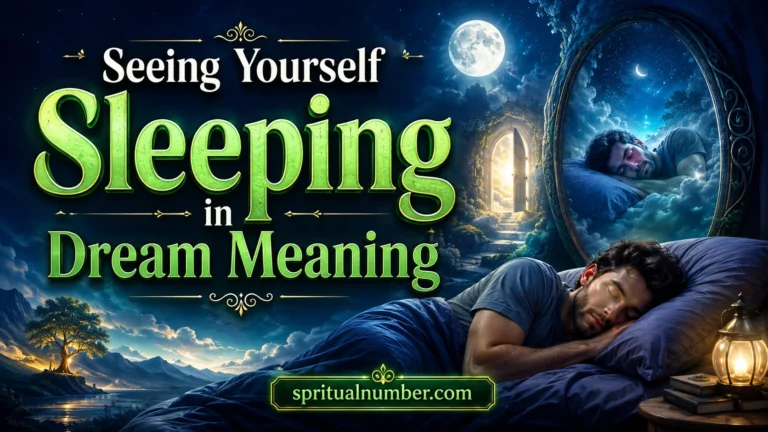
When you see yourself sleeping in a dream, it often acts as a mirror of your inner peace, stress, or emotional states. From my experience studying dreams and psychology, this symbolic vision reflects your subconscious mind trying to communicate answers about your life rhythms and personal needs.
It can show a transition in beliefs, self-awareness, or self-growth, and sometimes reveals desires and questions you haven’t consciously considered. Many people in the United States and around the world notice that their dream diary entries help them observe patterns in stressful situations or emotional states, guiding them toward self-reflection, healing, and mental clarity.
Such a dream also has a spiritual and energetic significance, connecting the soul, higher self, and universe. It can be a sign to realign with your purpose, explore creativity, or understand psychological implications of nightmares and common dreams.
In ancient wisdom and contemporary ideas, dreams like these encourage mindfulness, self-care, and detachment from anxieties, often serving as a puzzle that challenges the conscious mind. Writing down your dreams in the first five minutes can capture 90% of details, helping decode them in a metaphorical fashion, and offering insights into your inner path, transformation, and awakening in a way that is both haunting and calming.
Also read this : Snake Bite in Dream Meaning: Fear, Change, and Power
Quick Answer
Seeing yourself sleeping in a dream often symbolizes self-reflection, inner peace, and the subconscious mind processing your emotions, stress, and life experiences. Across psychological, spiritual, and cultural perspectives, it encourages mindfulness, self-awareness, healing, and personal transformation, reminding you to restore balance and reconnect with your true purpose.
Overview of Seeing Yourself Sleeping in Dream Meaning
Dreaming of yourself asleep often emphasizes introspection, pause, and subconscious processing. Unlike dreams where one is awake or active, sleeping in a dream highlights the inner world rather than external events.
How the Symbol Appears
• Typically shows the dreamer lying down, often on a bed or soft surface.
• Colors are muted—whites, blues, soft grays—to signal calm and vulnerability.
• Posture may be curled, stretched, or resting naturally, reflecting comfort or unease.
• Sometimes, surrounding imagery—windows, moonlight, or shadows—adds emotional tone.
Historical Background of Sleep Dreams
Sleep-related symbolism is ancient, appearing in cultures long before modern psychology.
Ancient Roots
• In Mesopotamia and Egypt, sleep visions were considered messages from gods.
• Greek and Roman cultures linked dreams of sleep to prophecy and inner reflection.
• Pre-Christian traditions often associated sleep with spiritual journeys or soul travel.
Evolution Over Time
• Medieval Europe saw sleep in dreams as both a blessing and a warning.
• In the 19th century, American transcendentalists considered sleep symbolic of intuition and nature’s cycles.
• Modern psychology frames such dreams as reflections of emotional and cognitive states.
Symbolism in the USA
In contemporary America, dreams about sleeping carry layers of meaning influenced by culture and media.
Mindfulness and Self-Care
• Symbolizes the need to pause from busy daily life.
• Often linked to wellness movements promoting rest and meditation.
Media Influence
• Films and literature sometimes portray sleeping dreams as portals to creativity.
• Social media trends may depict sleep as self-care or personal reflection.
Life Transitions
• Can indicate periods of change, uncertainty, or decision-making pauses.
• Suggests personal boundaries and the importance of emotional recovery.
Cross-Cultural and Spiritual Meanings
Globally, sleep in dreams often carries symbolic weight:
• In Hinduism, sleep may represent the soul’s journey or divine guidance.
• In East Asian traditions, sleeping dreams can symbolize renewal and balance.
• Indigenous cultures sometimes see sleep as a liminal state connecting the visible and spirit worlds.
• Across many traditions, sleep is a metaphor for trust, vulnerability, and renewal.
Emotional and Psychological Associations
Dreaming of sleeping yourself can evoke complex feelings:
Common Emotional Signals
• Calmness, serenity, or longing for rest.
• Vulnerability or awareness of unaddressed stress.
• Desire for personal reflection and introspection.
Psychological Insights
• May highlight subconscious processing of daily events.
• Can indicate avoidance or postponement of responsibilities if sleep is restless.
• Encourages attention to mental health and self-nurturing routines.
Modern Usage in American Life
This dream symbol has seeped into popular culture and daily life.
• Tattoos depicting sleeping figures or serene faces for introspection.
• Social media imagery promoting self-care routines and “rest days.”
• Home decor, including bedding and art, emphasizing calmness and sleep themes.
• Holiday imagery, such as peaceful winter scenes or cozy morning rituals.
• Branding in wellness and lifestyle industries that emphasize rest and mindfulness.
Common Misunderstandings and Controversies
While usually positive, dreams of sleeping can be misinterpreted:
• Some view them as laziness or avoidance rather than introspection.
• Overanalysis may cause unnecessary anxiety about productivity.
• Cultural misreadings can project negative stereotypes about sleep patterns.
• Dream interpretations vary widely; context matters more than rigid meanings.
Shifts Over Time
The meaning of sleeping dreams has evolved:
• Ancient societies focused on prophecy and divine messages.
• 19th–20th centuries emphasized personal intuition and psychological insight.
• Modern Americans often link such dreams to mindfulness, rest, and wellness.
| Context | Meaning in the USA | Common Associations | Notes |
| Bedtime dreaming | Reflection, personal rest | Calm, vulnerability, introspection | Frequently seen in wellness apps |
| Public sleep in media | Pause, creative inspiration | Art, storytelling | Films and TV often show this |
| Resting in spiritual dreams | Renewal, soul journeys | Balance, meditation | Cross-cultural spiritual meaning |
| Sleep during stress | Emotional reset | Recovery, subconscious processing | Emphasis on mental health |
FAQs
What does it mean if I see myself sleeping in a dream?
Seeing yourself sleeping in a dream usually reflects your subconscious mind and emotional states. It can show your stress, desires, or need for inner peace and self-reflection.
Can this dream indicate a spiritual message?
Yes, it can carry spiritual significance. Many traditions view it as a sign from your higher self or soul, encouraging self-growth, mindfulness, and alignment with your purpose.
How can I interpret the details of this dream?
Keeping a dream diary and writing down your dream in the first five minutes helps decode its symbolic meanings. Look for patterns in your emotions, stress, or life rhythms to find insights.
Is seeing yourself sleeping related to real-life stress?
Absolutely. This dream often reflects stressful situations, anxieties, or personal needs. Observing it can guide you toward self-care, mental clarity, and emotional balance.
Does this dream have a universal meaning across cultures?
While interpretations vary, many cultures and faiths consider it a sacred symbol connected to healing, self-awareness, and the inner path of the human consciousness. It often carries universal themes of transformation and awakening.
Conclusion
Seeing yourself sleeping in a dream offers a unique window into your subconscious, emotions, and inner path, blending both psychological and spiritual layers. By observing these dreams and noting their symbolic details, you can gain insights into your stress, personal needs, and life rhythms, while also connecting with your higher self, soul, and purpose. This practice of self-reflection and mindfulness not only aids self-growth but also helps you achieve inner peace, mental clarity, and a deeper understanding of your consciousness in the modern world.

